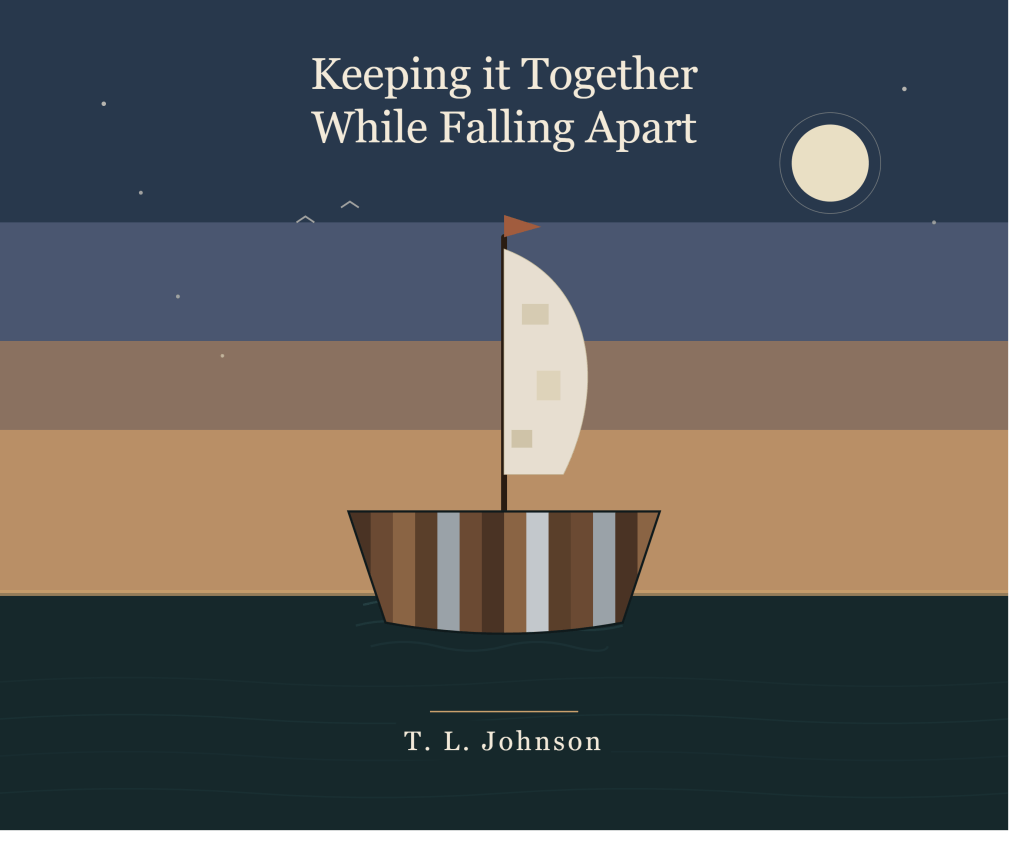
Next Monday, I start the first of sixteen appointments at Mayo Clinic’s Pain Rehabilitation Center in Rochester, Minnesota. That same day, I’m launching a GoFundMe campaign to help fund the final professional edit of my memoir, Keeping It Together While Falling Apart.
Here’s how I got here.
I started working on this book just over a year ago. The original idea was a nonfiction work focused on the science and medical technology behind each of my thirty-four surgeries.
The story would write itself, but at the time, all my suffering, my symptoms, and my struggles were unexplained. As interesting as the journey was, the ultimate arc would have ended in unexplained suffering. That is not a book destined for publishing.
But last year I received a diagnosis, a suspect in the mystery of my making. It was an explanation that would create a story arc worth telling. So, instead of a chapter-by-chapter explanation of modern medical procedures, the memoir became a more personal story — narrative chapters, each followed by an interlude where the science teacher in me steps in to explain the biology and medical procedures behind what just happened.
I was still falling apart, but now I understood why.
The thirty-four surgeries still existed; the diagnosis did not, could not change the past. I was still in pain, and I was still disabled. It was now up to me to keep it together while falling apart.
What is it like to slowly lose who you are? To fight against the urge to shout “Why me!”
The book is as much about what happened and why as it is about how to deal with changes that are beyond your control. Things that completely change how you live your life, what you do, and how you interact with the world. I needed to confront who I was and what I was to become.
An excerpt from Ship of Theseus — the chapter that asks how much of a person can be replaced, repaired, and rebuilt before they stop being who they were — appeared in the March 2026 issue of Creative Wisconsin Magazine.
Knowing has helped. It has not cured me, but it has let me stop blaming myself, even though the cause is a part of me. The focus becomes more about how to live with the hand I was dealt.
To enjoy the good days and the bad. That becomes a daily challenge. It takes a shift in perception to be thankful while experiencing the grinding of chronic pain. Still, I am lucky. I have great support from family and friends. I have the privilege of my position and profession, both of which have provided countless medical procedures and the medical expertise needed. That too is part of my story.
As I say in the memoir: “I lost the lottery when it came to connective tissue, but I won almost every other kind of lottery that counts.”
Mayo’s program focuses on functional restoration, self-management, and quality of life — not another surgery, not another fix, but relearning how to live in this body. They’ll start with my full medical history, current status, medications, and treatments, then hand me off to an interdisciplinary team: physicians, physical therapists, psychologists. Nervous system calming. Physical exercise. Medication optimization. Cognitive-behavioral work. Sixteen appointments to retrain what thirty-four surgeries couldn’t fix.
I’ll keep a journal and work on the capstone chapter each evening. My goal is to send the completed manuscript to the editor in September.
If you’d like to help get this book into readers’ hands, the GoFundMe campaign goes live Monday, the same day I walk into Mayo. Every dollar goes toward the professional edit, cover art, formatting, and publishing costs this manuscript needs before it reaches readers.
 T.L. Johnson