Okay, full disclosure. I eat wheat bread 90% of the time. I like white bread. I now love wheat bread, but it took a while. The science of acquiring a taste for foods through repetition and exposure is established. In a future article, I will tell how I acquired a taste for bourbon. True Story.
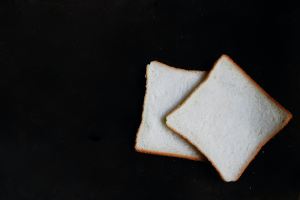
Now back to white bread. I love toasted white bread slathered with butter. I adore grilled cheese sandwiches and a BLT on white bread with mayo. Specifically, I love Wonder Bread. But it makes me wonder how far removed Wonder Bread is from its starting ingredients.
Time for another Start to Finish by me, Terry Johnson. Let me know what you are curious about in the comments below.
I suspect we will start our exploration with wheat. Isn’t that what bread is made from? Let’s take a look.
Nutrition

Unbleached Enriched Flour (Wheat Flour, Malted Barley Flour, Niacin, Reduced Iron, Thiamin Mononitrate, Riboflavin, Folic Acid), Water, High Fructose Corn Syrup, Yeast, Contains 2% Or Less Of The Each Of The Following: Calcium Carbonate, Soybean Oil, Wheat Gluten, Salt, Dough Conditioners (Contains One Or More Of The Following: Sodium Stearoyl Lactylate, Calcium Stearoyl Lactylate, Monoglycerides, Mono- And Diglycerides, Distilled Monoglycerides, Calcium Peroxide, Calcium Iodate, Datem, Ethoxylated Mono- And Diglycerides, Enzymes, Ascorbic Acid), Vinegar, Monocalcium Phosphate, Yeast Extract, Modified Corn Starch, Sucrose, Sugar, Soy Lecithin, Cholecalciferol (Vitamin D3), Soy Flour, Ammonium Sulfate, Calcium Sulfate, Calcium Propionate (To Retard Spoilage).
So, let’s see here. I don’t have a degree in speaking preservatives, but I have a degree in chemistry, which might help me figure out what is in this loaf of bread. Okay, so writing that sentence makes me a bit sad. There are websites dedicated to discussing all the chemical additives and preservatives used in processed foods. Let me know if you are interested in having me explore this area further.
Unbleached Enriched Flour, which it says on the label, is really enriched white flour. It says (Wheat flour, Malted Barley Flour, Niacin, Reduced Iron, thiamin Mononitrate, Riboflavin, and Folic Acid.)
You see, they need to enrich the flour with nutrients because the process they used to make the white flour removes many of the naturally occurring nutrients. Wait! That doesn’t make a lot of sense. Why remove the nutrients? Can’t you make flour without removing the nutrients?
The answer is yes, of course, you can. You then have Wheat Flour. Which can be used to make wheat bread.
The good news is that more Americans eat Whole Wheat bread (57%) than White bread (43%). Still, 43% is a huge number. Globally the bread industry cooks up Close to 500 billion dollars annually. Now that’s a lot of bread. Ten Largest Bread Brands
The bad news is 43% of Americans eat white bread. Let’s look more closely at our Start: Wheat, and our Finish: White bread.
Start – Wheat
Process: Remove Bran, Germ, nutrition, and much of the fiber.
Enrich by adding vitamins and fiber back in.
Finish – White Bread
Wheat is one of the big three grains produced in the world. Rice, Corn, and Wheat. The two other agricultural commodities that surpass those staples are Cow’s milk and Sugar cane. If you look at the ingredients list for white bread, you will see the third most abundant ingredient is sugar in the form of corn syrup.
Oh, yeah, I almost missed it. And there’s sucrose, a disaccharide carbohydrate that, in science, we call sugar. But there’s more. There’s also sugar. So, more sugar, I guess. 5 grams of added sugar. Thus the deliciousness and the 140 calories per serving (2 slices.) Now, that makes sense. 2 slices per serving size for bread.

To make bread, the Wheat must be processed into flour. Sounds simple enough. Collect the grains and crush them into flour right. That is correct. If you are making Wheat bread.
A grain of wheat consists of the following:
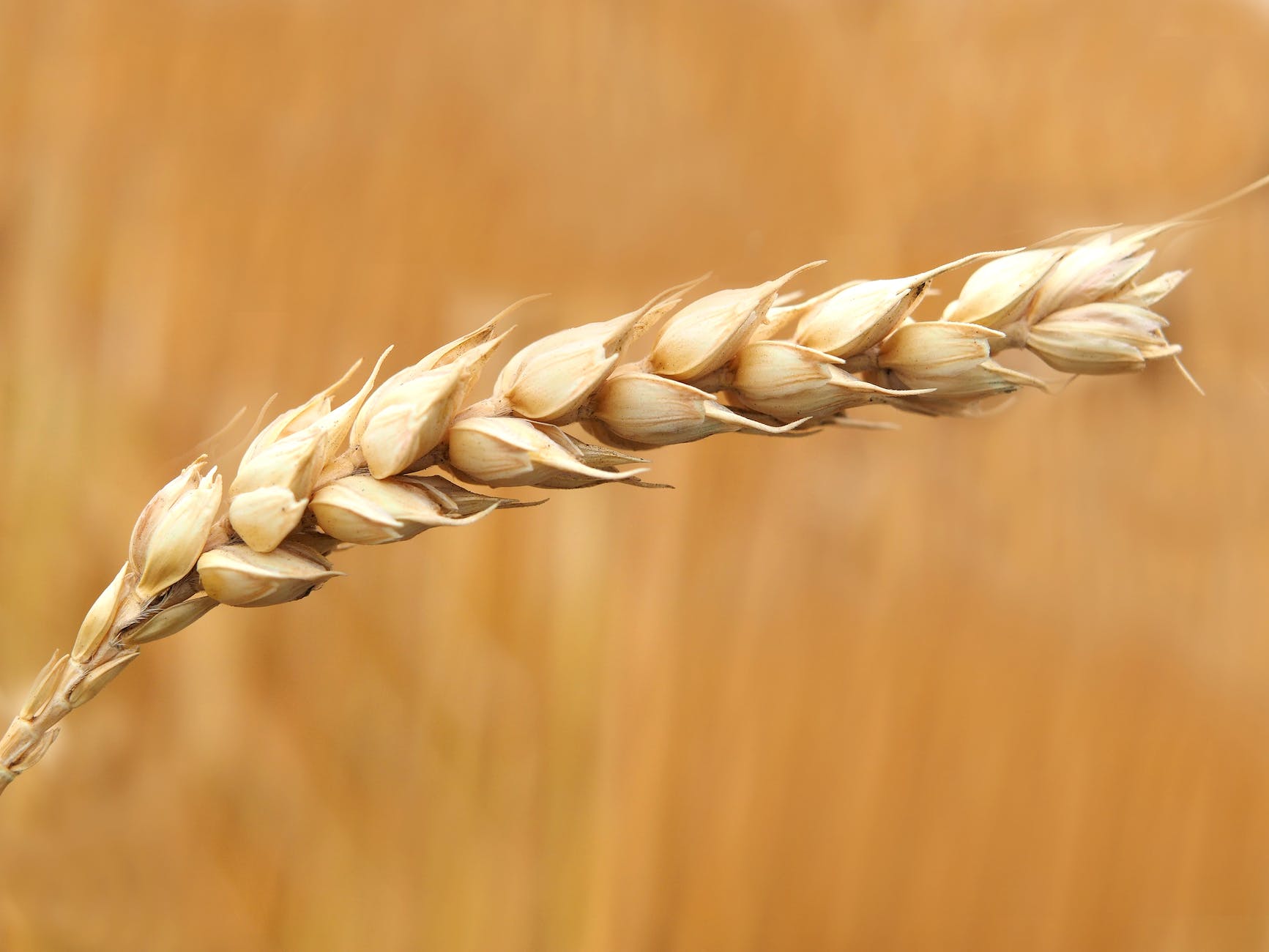
Bran – the outer coating
Germ layer – embryo
Endosperm – energy supply for developing embryo
If, however, you want to get rid of some of the fat in the flour and make it last longer, then you take out the Germ layer. And with it, the B vitamins and some trace minerals. The bran contains much of the fiber, and some protein and minerals. It makes the bread a bit more difficult to chew and thus must go.
That leaves us with the easy-to-digest carbohydrate-filled endosperm. It is the energy reserve the plant packs for the developing embryo (Germ Layer). It also contains proteins and vitamins like Niacin and Riboflavin. Oh, so there is still some good stuff in there, right?
Yep, they take the endosperm and grind it up, then bleach it to make it white.
The process of chemically bleaching destroys much of the nutrition that remains. In fact, so much so that back in the 1940s, they decided to enrich it with vitamins to make it a healthy choice.
Why do we bleach it at all?
To give the flour better backing characteristics. They bleach it as a shortcut to produce better, more predictable backing characteristics for the finished product. They could let the oxidation (bleaching) occur naturally, but that would take time, and the result would be less consistent and predictable. It would take logistics, planning storage, and, well, cost.
The downside to the chemical bleaching is the suspect use of Benzoyl peroxide and chlorine in the bleaching process. Bleached Flour is banned in the EU and Australia due to health concerns over this chemical process.
I get it if you are a company making a baked product. Consistency is important but isn’t the health of your customers more important???
Wonder Bread uses unbleached enriched white flour. So, they don’t use the harsh chemical shortcut. But they still process it and remove the Bran and Gern and thus the nutrition and are forced to enrich the end product.
Whole Wheat bread and White bread have similar nutritional values at the end of the processing, so it is clear that Wheat bread is by far the better choice. Here’s why.
Wheat still ends up having more vitamins than enriched white bread. It is less processed and has fewer possible health risks. It takes less processing to manufacture. Less energy, less water, less chemicals.
The biggest health concern for processed white bread is the amount of easily digested sugars which means this food item has a high glycemic value. Not a sound choice.
In a logical science-based world, that would equate to a product that costs less to make. But our food production system is anything but based on logic. So, it is more expensive to make wheat bread due to the time it takes for the wheat flour to naturally oxidize.
When you think about it, it sounds pretty stupid to process the Wheat and remove all the nutrition, then enrich the flour at the end to make it a healthy alternative. I understand some of the processing is done for efficiency and to provide desired baking characteristics. Still, those characteristics result from the over-processing of the wheat in the first place. They are not a necessary evil. We can do better.
My favorite is Brownberry Natural Wheat.
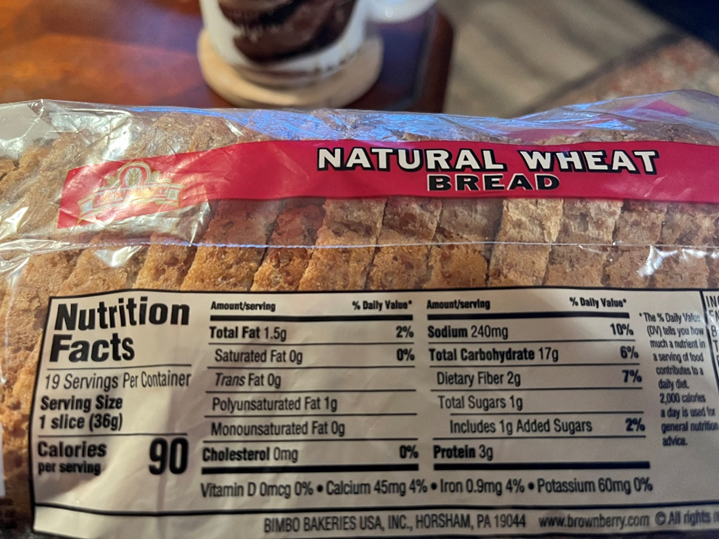
Strangely it is almost always gone from the shelf at my grocery shop. I have to buy three at a time and freeze two to have a supply on hand.
Let’s take a closer look. Only 90 calories. Whohoo! Oh, wait. Serving Size 1 slice. Marketing Jerks! Only 1 gram of added sugar. I talk about servings sizes in my article. From Serving Size To Total Calories!
Remember to leave a comment and let me know what you are curious about. Also, go ahead and subscribe. You may notice I have a new Author Page. Terryjohnsonauthor.com, where this blog is linked. I will never sell your information. Subscribing simply means you will receive links to the posts as they are released and information about book events and book releases. Thank you again for your support.
 T.L. Johnson
I’m curious about sprouted grain bread – is it more or less processed than wheat bread? I often choose it as a healthier (lower carb) option but wonder how it compares from your standpoint.
LikeLike
Sprouted grain bread is a whole grain bread. The grain is allowed to sprout. It has a few more micronutrients and some nutrients may be easier to uptake. Overall Sprouted grain bread and Whole wheat bread have a similar nutrition profile. In this case, eat which ever you enjoy more!
LikeLike