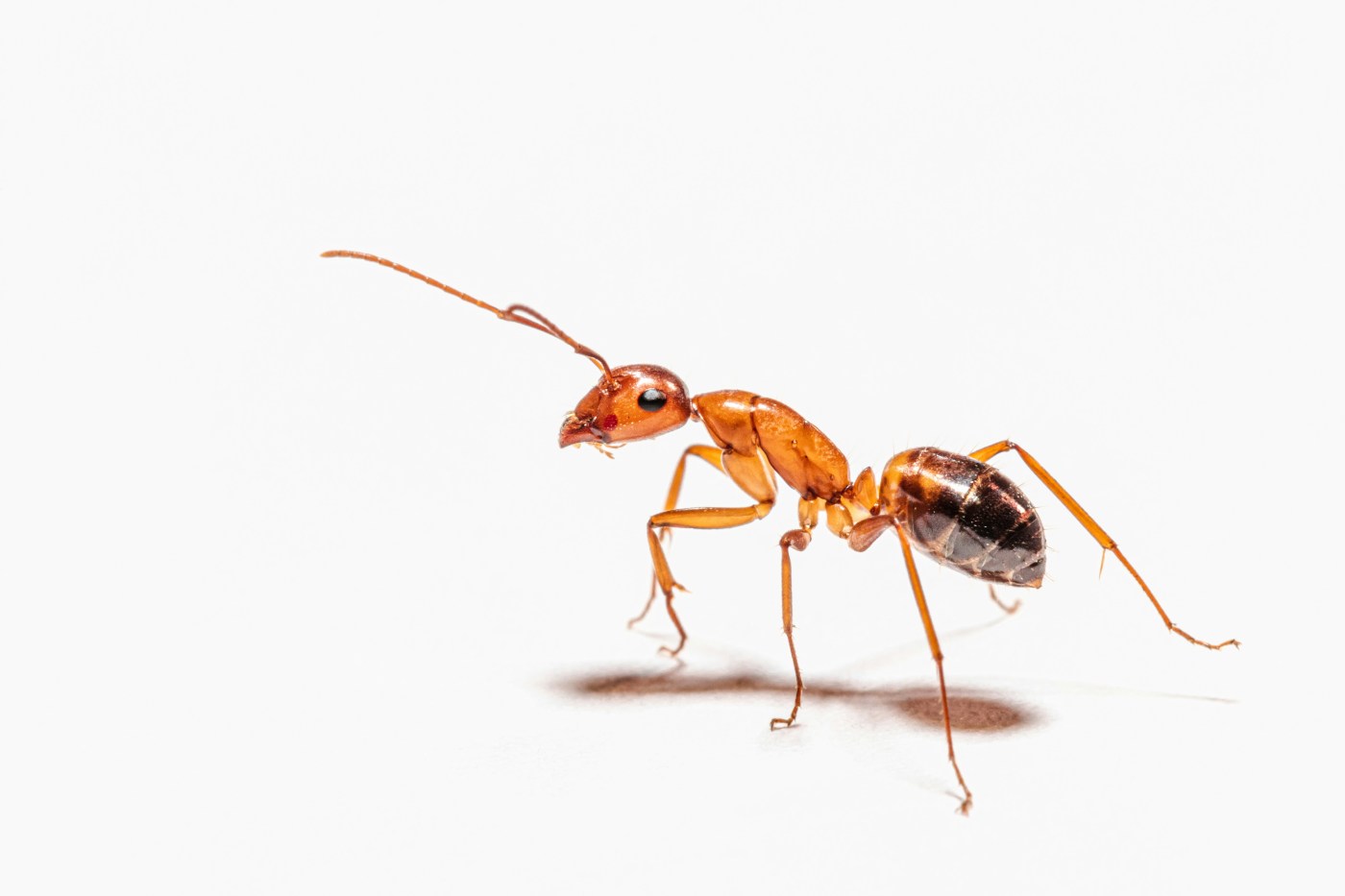
Last week, with the sun shining bright, the flying ants emerged, and hundreds of thousands of insects erupted from the lawn and filled the air.
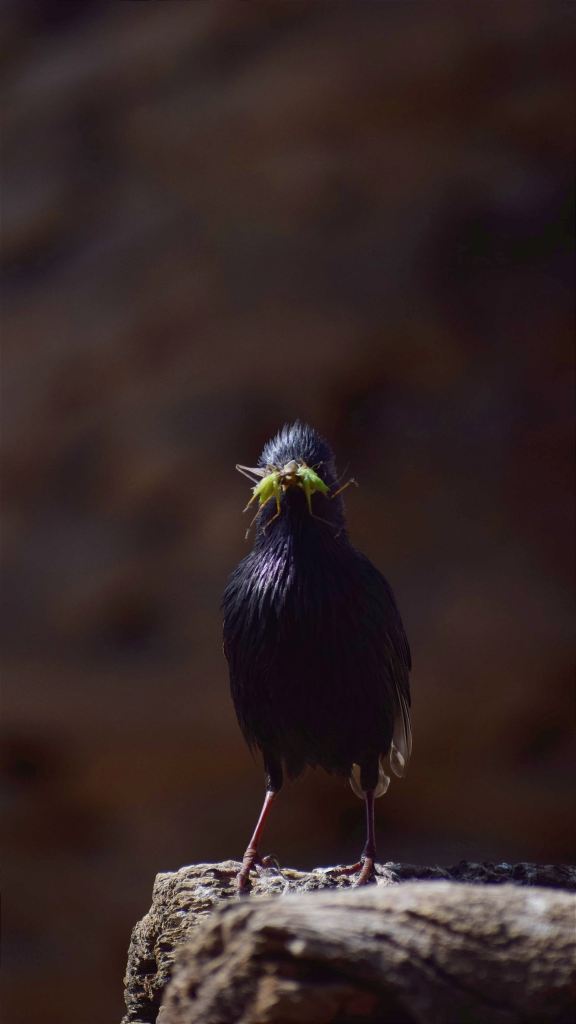
These flying insects were a smorgasbord for the birds that frequent my yard, often producing a feeding frenzy of avian activity.
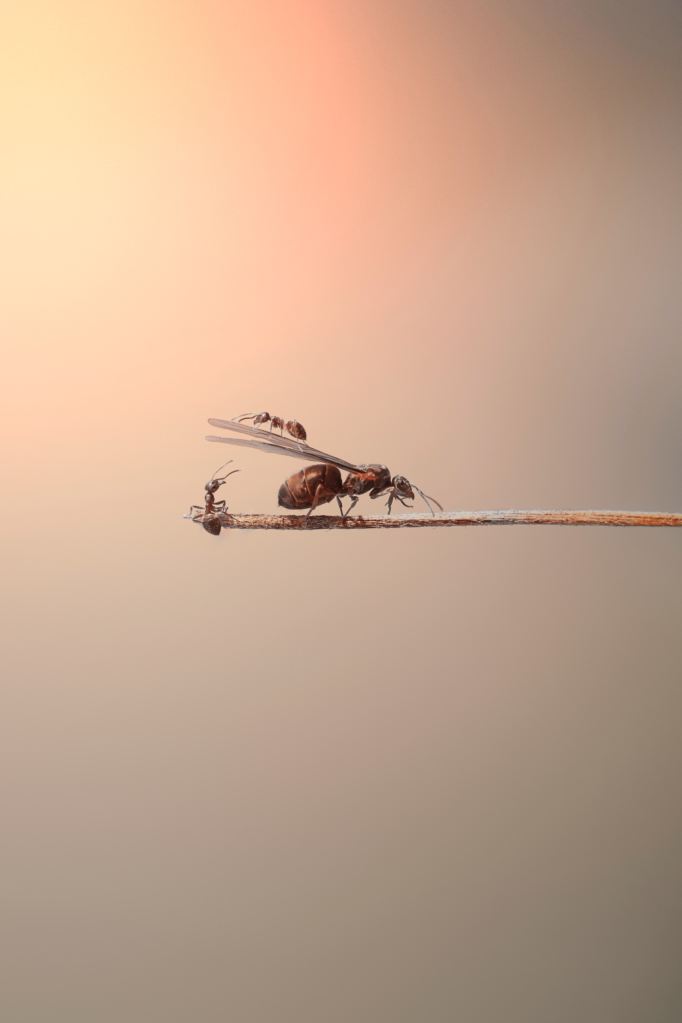
This year, I found at least four distinct nests that launched all their nuptial flights on the same day. As mentioned in previous articles, this year has been a particularly dry summer in Southern Wisconsin. This year, flying-ant day happened to begin a few days after a rain event triggered by a cold front. On the next warm day, ants emerged from the nests and took flight.
Excellent timing for the migrating birds passing through Sothern, Wisconsin, on their way to warmer climates.
The flying ants are called Alates. The alates are composed of both males and females. Colonies are founded by a single female called the queen. A queen begins the journey of raising her own colony during this nuptial flight.
A female alate will mate with multiple males during those few hours of mating frenzy. She will then find an appropriate place to create a burrow. With her inner chamber secured, she will produce the foundation for the future colony by laying eggs. The newly hatched ants are all female; their job is to forage and bring food back to the queen. The queen’s job henceforth is to continually supply the colony with more and more eggs. The number of ants in a colony can reach 20,000 workers.
The following summer, the queen will produce unfertilized eggs that will develop into males. These males have only one purpose. They mature, grow wings, and become alates. They launch with thousands of others in search of a female from another colony. And the cycle of life is renewed.
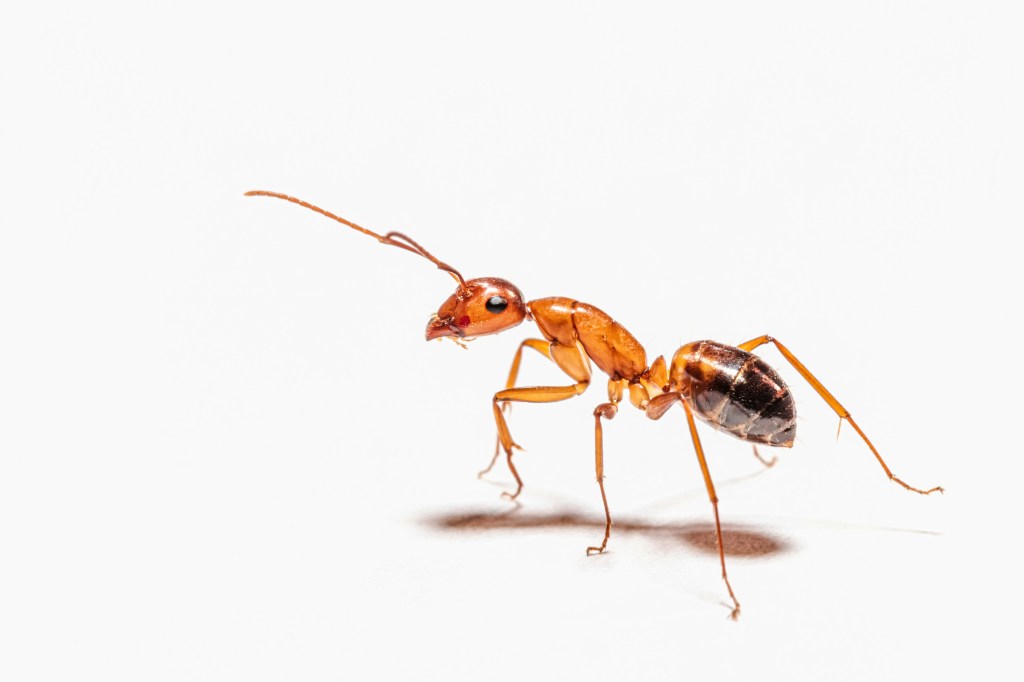
Sadly, the males will only live a day or two once they become alates. Most will have been consumed by birds, but a few will have succeeded in finding a mate and passing their genetics to a future generation of ants.
This, of course, is only possible if you, as a lawn owner, allow it to happen. By applying chemicals to your lawn, you are killing ant colonies. The lawn companies and pest control industry will do their best to portray ants as a scourge that must be dealt with.
If you happen to Google Ants. You get a mixed bag of results. Still, most of the returns are information about ants. Only a tiny percentage of the links are for pest control companies.
If you Google ‘Ant in the lawn,’ you will find the page littered with pest control companies’ advertisements and blogs built by those same companies espousing the merits of their chemical treatments in controlling ants. Interspersed with the pest control companies whose job is to kill all pests are advertisements for the lawn care companies. Who’s job is to kill all things except one. The grass.
Are ants pests?
Unfortunately, and I think without due process, UWN Extension considers ants pests even though the list of damage caused by ants seems to be far short of a call for aniticide and the killing of all ants.
Damage from ants varies. Most are primarily a nuisance, causing little actual damage, although they can be annoying and even upsetting when found in your home.
Some species can infest food. Others, like carpenter ants, can weaken wood in structures. While not common, at least one species, Pharaoh ant, has been known to transmit some diseases, like Salmonella.
Some ants nest in lawns. Fortunately, they do not feed on or injure grass, but their presence can be annoying. Cornfield ants nest in lawns where the grass is thinning or has become bare, creating small mounds. Field ants can nest in areas of the lawn that are growing well, creating mounds up to a foot in size. These large, high mounds can interfere with lawnmowers. But lets not make a mountain out of an ant hill. The ant hill are nothing more than a small inconvenience and a tiny blemish that can either be overlooked or perhaps looked upon as the smorgasbord that it truly is.
Some ants are pests.
Just like some plants are weeds and some plants are toxic. Not all ants are pests or harmful. Weeds are plants growing in the wrong place. When Black Walnut seedlings begin to sprout in the cracks in my driveway, they need to be pulled. An ant crawling on my counter needs to be dealt with. Otherwise, here in Wisconsin, we can leave the ants alone. Because, for the most part, the ants will leave us alone. There is a silver lining to having sub-zero temperatures for several months of the year. Suppressing pest insect species that plague folks in the south is one of them.
Control: There is no need to control field ants in areas where there is no human activity.
Field ants DO NOT come indoors for food.
They exclusively collect food outdoors and feed on live and dead insects, as well as on aphid honeydew. These are the ants that make the ant hills in your yard. They are good neighbors.
Pavement ants can be a problem in Wisconsin. They are an invasive species imported from Europe. They nest under rocks, pavers, and cracks in the foundations of buildings. They will invade the indoors, seeking high-protein food sources. Limiting access to my weatherproofing and sealing openings is the first line of defense. Applying a spray or threshold powder can restrict ants from accessing the home’s interior. Precise and limited uses of insecticide may be called for.
We started by discussing one benefit of field ants in our yards. They provide food throughout the year for insectivores.
They are also an intricate part of the web of life in our biodiverse habitats. Ants farm fungi and plants as food sources.
Some ants are farmers! No. Really!!
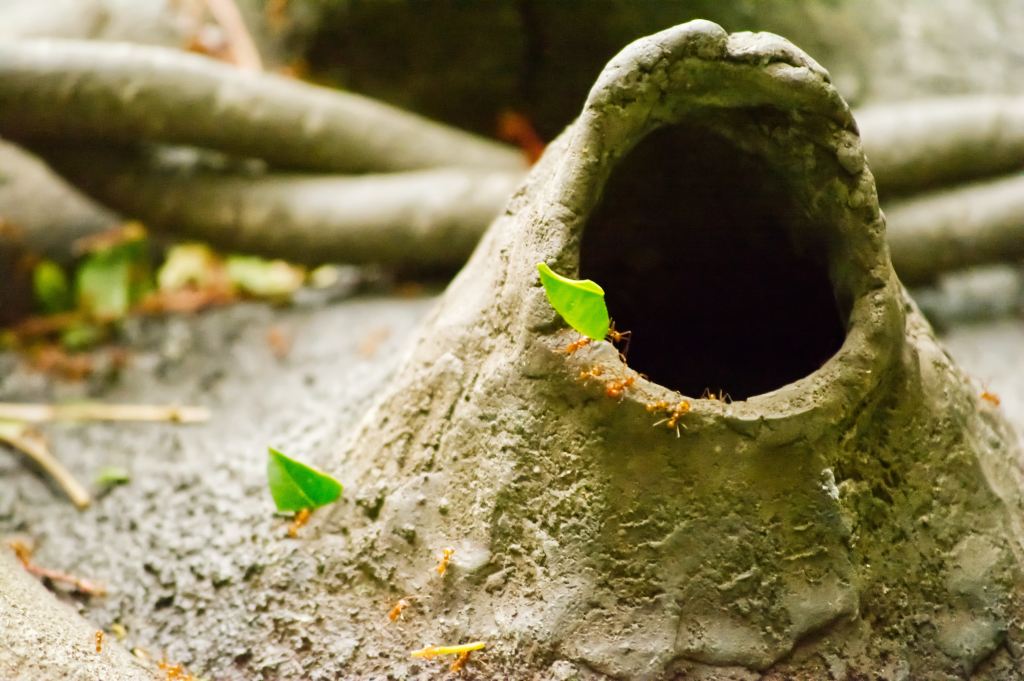
Leafcutter ants do not eat the leaves they cut. Instead, they take the leaves underground and grow a crop of fungus to feed on.
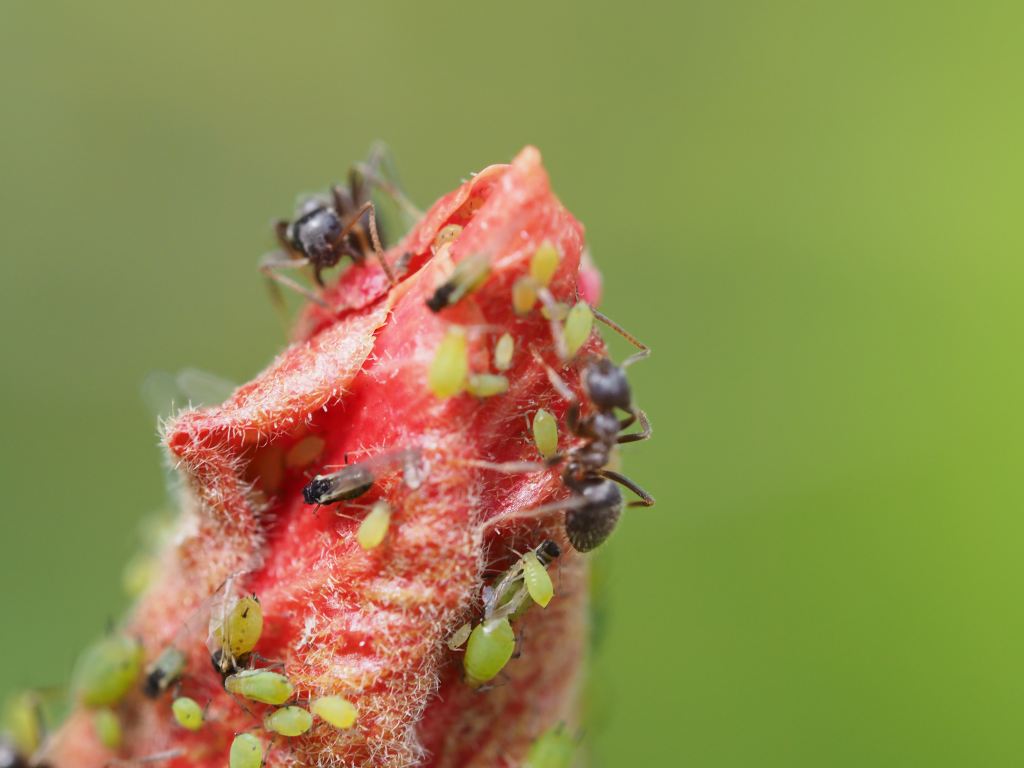
Ants raise cattle, okay, aphids. Some species milk them much like humans milk cows. Aphids produce a sugary treat for the ants called honeydew. Some ants serve as security guards for aphids as they feed on plants.
Some ants protect plants. Acacia trees not only produce sugar for their protectors, but the plants have evolved over time and produce little ant hotels for them to live in. In return, the ants will attack herbivores thousands of times bigger than themselves to deter them from feeding on the plant they call home.
Butterflies also show the ant some love. This myrmecophily, literally “ant love”, is so evolved that the larvae of many species have developed specific body parts to feed and care for ant species. Ant presence, in return, provides caterpillars protection from predators.
The point is. We are but part of the puzzle. We should avoid indiscriminately killing insects in the name of a pretty lawn. As we have discussed, the modern lawn is nothing more than a dead zone with far-reaching adverse side effects.
Using lawn chemicals has led to a drastic decline in insect populations.
Bird population decline is linked to a disruption of available food and habitat.
Water used to irrigate lawns contributes to the decline of water in aquifers.
Fertilizer application to lawns directly contributes to algae blooms in our lakes and streams and dead zones in our ocean.
Burning fossil fuels to cut lawns contributes to climate change.
Ants are part of the food web and should not be killed indescribably. The same chemicals that kill ants also kill many other beneficial insects. Not only do insects assist in pollination, but they also serve as a base for an interconnected food web.
Join me and stop using chemical treatments on your lawn. We can make the world a better place – One Yard at a Time. Thank you for your interest and support. Check out TerryJonsonauthor.com to see more of my work.
 T.L. Johnson
Leave a comment