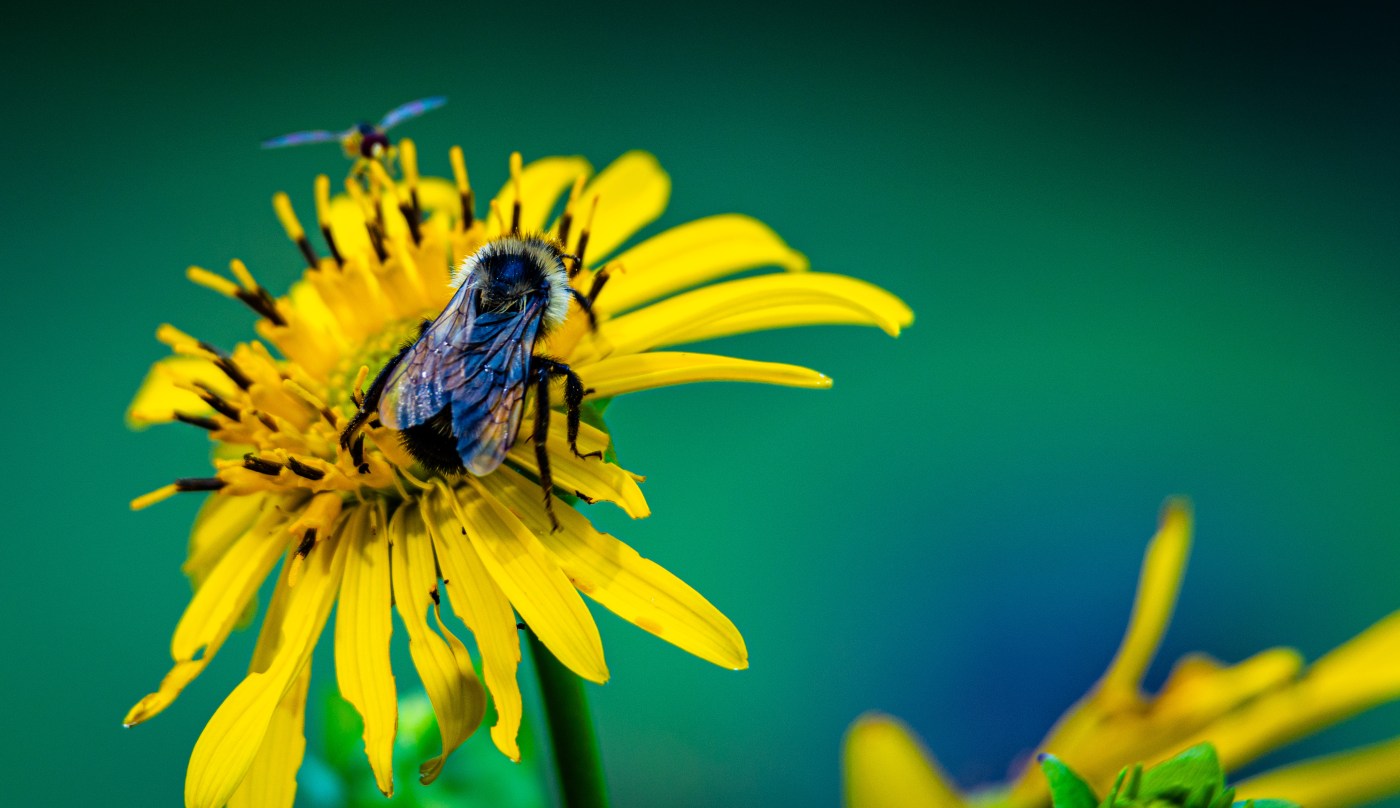
You have all heard about the plight of the bumble bee. Not to be confused with the Flight of the Bumblebee. An Orchestral interlude written by Rimsky- Korsakav
I might suggest you listen to the music while watching the video below which I captured a few weeks ago in my backyard garden.
Last week in our discussion of Monarchs, The Reign of the Monarch – Butterfly, we touched on the strange world of the ESA, the Endangered Species Act, and the media frenzy produced last year at this time when the IUCN International Union for the Conservation Nature declared the Monarch as endangered.
This week, we look at the Plight of the Bumble Bee. First, you will be excused if you are a bit confused about what is happening with bumble bees. That is because almost all the coverage for the plight of the bees goes to the Honey Bee. The western honey bee or European honey bee (Apis mellifera). That’s right, the honey bee is an alien species here in the U.S. The European honey bee was shipped to the U.S. Colonies, or that is, the British Colonies, back in the mid-1600s.
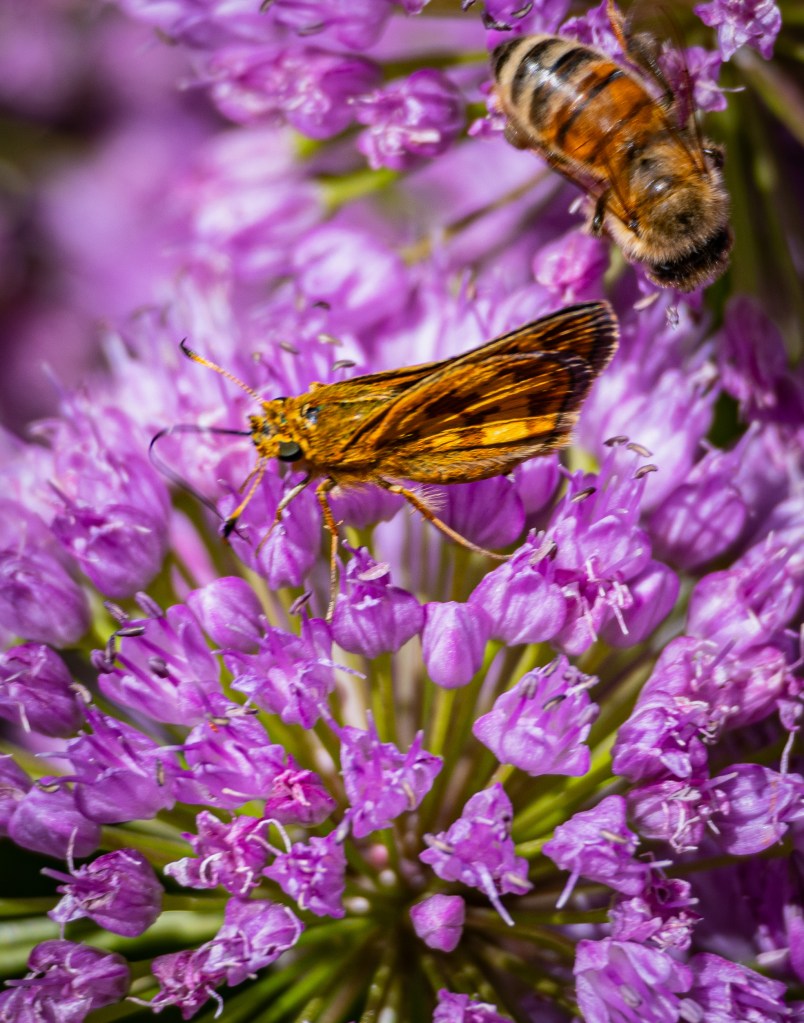
Top stories in the news on bees in August 2023 – Bee stings.
Next, an article in The New Yorker Titled – Is Bee Keeping Wrong.
There were no articles on Colony Collapse in the news feed in mid August 2023.
The top stories a decade ago were all about Colony Collapse. Bee colony collapse syndrome is characterized by the drones leaving the queen and a few nurse bees behind.
The Beekeepers were losing between 40-90% of their colonies.
There are many theories about what contributes to the losses, including:
- According to the Environmental Protection Agency website,
- Increased losses due to the invasive varroa mite (a pest of honey bees).
- New or emerging diseases such as the Israeli Acute Paralysis virus and the gut parasite Nosema.
- Pesticide poisoning through exposure to pesticides applied to crops or for in-hive insect or mite control.
- Stress bees experience due to management practices such as transportation to multiple locations across the country for providing pollination services.
- Changes to the habitat where bees forage.
- Inadequate forage/poor nutrition.
- Potential immune-suppressing stress on bees is caused by one or a combination of factors identified above.
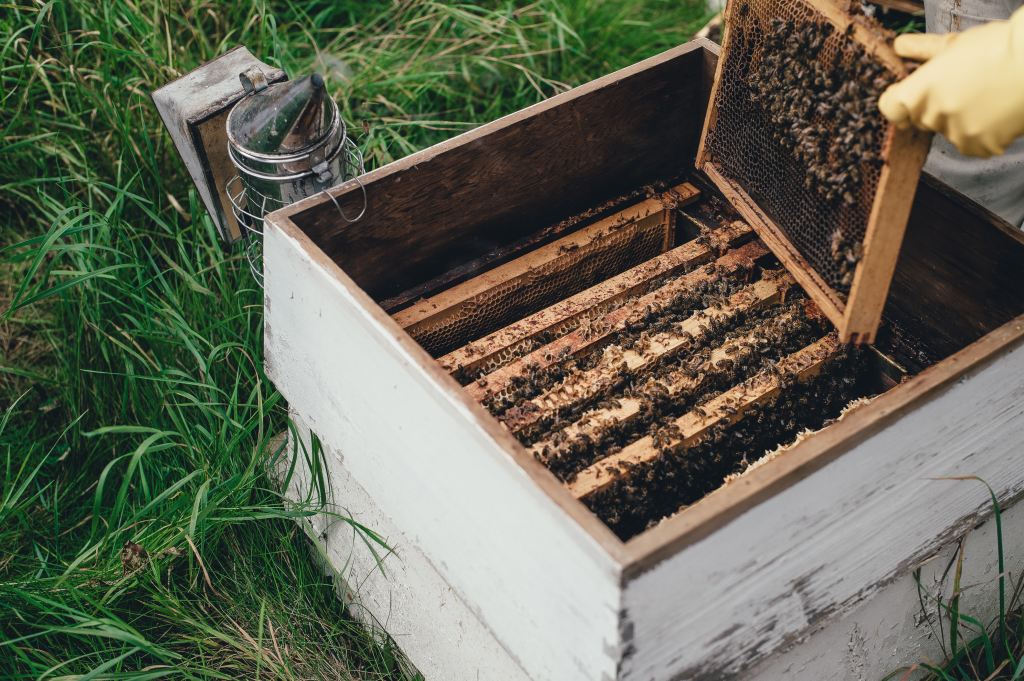
But, it seems the situation has stabilized, and losses have plateaued at around 25% with a downward trend.
Whew! I am so glad the bees are safe. What a success story. We all seem to have a taste for any sweet story about Honey.
That may be true for the honey bee, but it is not such a sweet story for our native bees. The colony collapse story has been a distraction for the public from the ongoing crisis in bee populations. Our native bees are in decline.
28% of bumble bees are threatened, according to the IUCN. 50% of leafcutter bees and 27% of the Mason bees are also threatened.
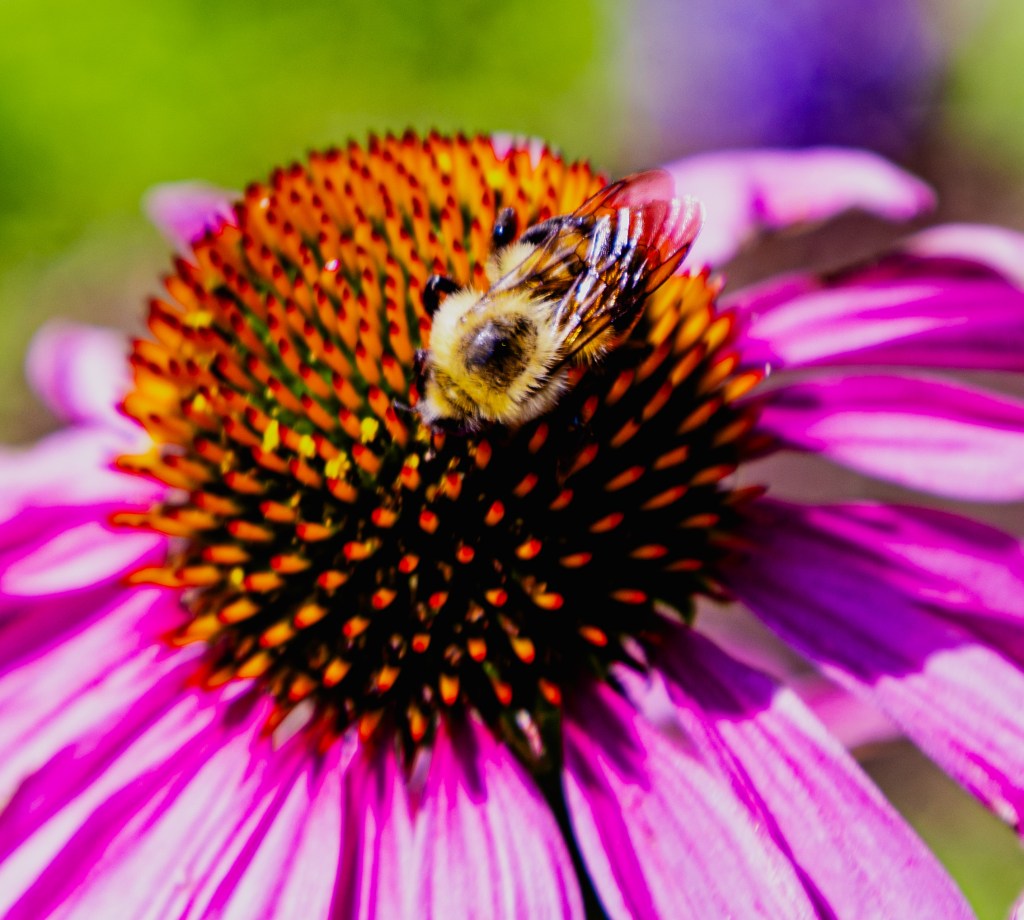
Bees are essential to all of us.
As mentioned many times, humans rely on bees and other pollinators to produce food crops. Pollinators are essential to a healthy environment. These declines have a direct effect on our well-being. They are not simply a concern for environmentalists who love nature for nature’s sake. It is critical we do something. In this blog/book we have been discussing steps that we can all take to make a difference in this area.
- We can stop using chemicals in our yard.
- We can embrace the existence of dandelions.
- Convert areas of our lawn or patio into biodiverse habitats by planting native perennial plants.
- Even go so far as to build and maintain bee lawns.
- We can save the planet one yard at a time.
The Decline of the Bumble Bee.
One is the application of pesticides used in agriculture that are spurring the decline in insect numbers, including native pollinators like the bumble bee.
Neonicotinoids are chemicals shown to spread from agricultural sites and directly impact bee populations. The chemical is currently banned in the European Union but not here in the United States even though the science is clear concerning its impact on non-target insect populations.
- Pesticides are designed to kill insects. They kill non-target species. They produce unintended consequences at many levels of the food chain. Certain pesticides are proven to be a problem.
However, the use of these and other toxic chemicals on millions of acres of land throughout North and South America and other parts of the world are having a devastating effect on insect populations.
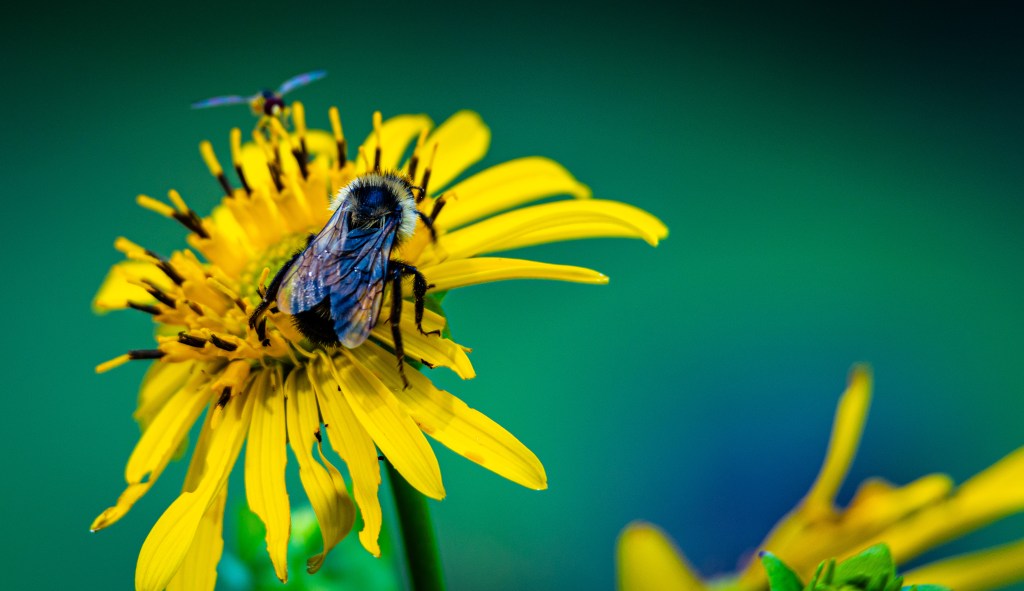
Habitat loss is another major factor that I and others are working to mitigate by encouraging individuals to convert their lawns to biodiverse habitats. Check out previous articles on how to provide habitats for our native pollinators. Let Dandelions have their Day.
Less habitat and the conversion of natural habitats to agricultural land, where deadly chemicals are applied, will impact insect populations, including native bees.
- Habitat loss removes food sources for native bees.
Insects serve as the base of many food webs. We see the associated decline in bird populations worldwide as a direct result of the insect decline.
- 80% of birds rely on insects in their diet. Pesticides and habitat loss are drastically reducing the insect population. This leads to a decline in bird populations.
Let’s take a look at the Plight of the American Bumble Bee (Bombus pensylvanicus). Once abundant and found throughout the United States, the American bumble bee is extinct in eight U.S. States and has declined in New York State by 97%. It has also declined over 50% throughout the Midwest in the last couple of decades.
Despite its dwindling numbers, the American Bumble Bee is not protected in any state by Federal or State law.
While neonicotinoids are protected in the United States. The use of neonicotinoids has been assessed and deemed safe (contrary to the latest scientific findings) in the United States. I remind you that the science is clear that these chemicals directly affect non-target insect populations, including our native bees.
I suggest you take a look at Dave Goulson’s book Silent Earth, Averting The Insect Apocalypse
In The Reign of the Monarch – Butterfly, we discussed the broken and underfunded system called the Endangered Species Act.
There is little hope the ESA will Act in any way until it is too late. Many in the petrochemical and agricultural industry would oppose any action and welcome the delay. This explains the reduced funding of the ESA, the continued authorization of dangerous pesticides, and the profit over Earth policies of the U.S. Government. Corporations and their lobbyists do not have the people’s best interests in mind as they use their wealth and power to push for their profits.
So, what can be done? Of course, we can continue making a difference on our properties. Working to Save the Planet One Yard at a Time. We can also work toward political change by voting and supporting potential elected officials who will work to protect the health of the people they represent.
As always, I thank each of you for your support. Please support by subscribing to the blog and hitting that like button. To check out all my writing and photography work, please go to TerryJohnsonAuthor.com
 T.L. Johnson
Leave a comment