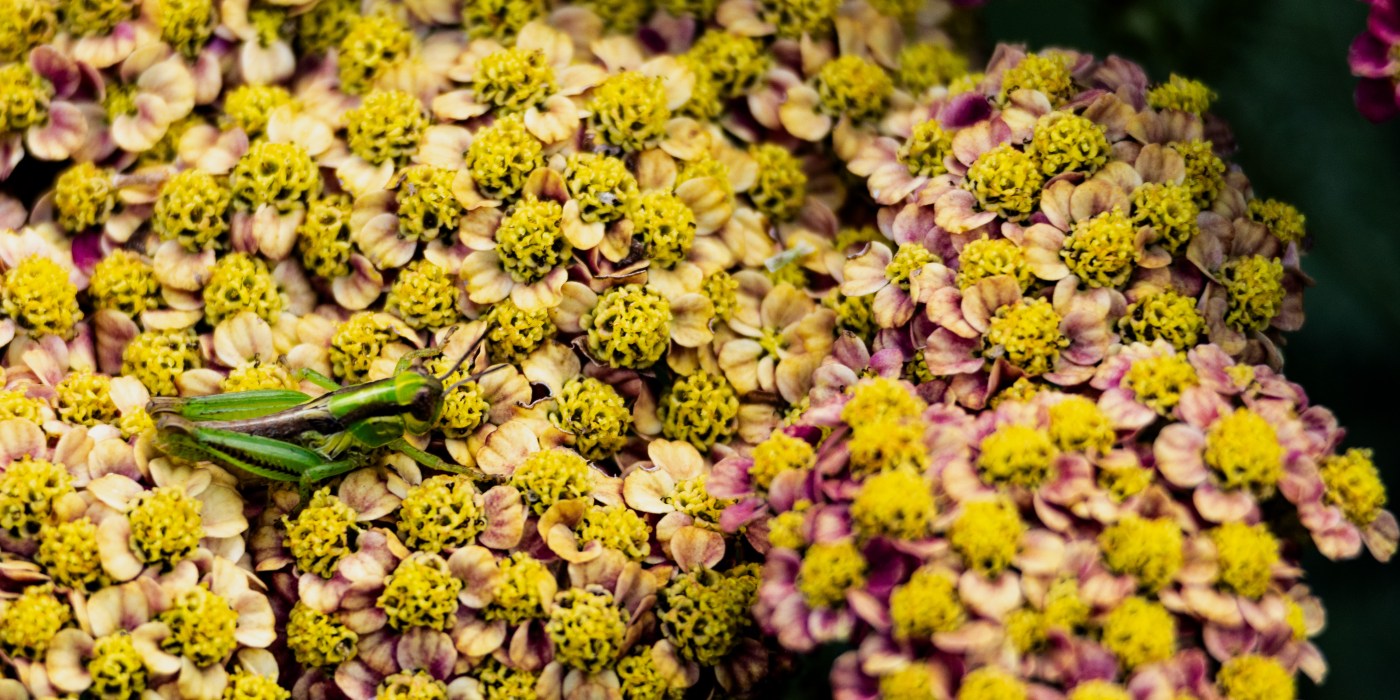
Native Plants – are the indigenous terrestrial and aquatic species that have evolved and occur naturally in a particular region, ecosystem, and habitat.
Our goal is to increase biodiversity on our properties. To do that, it makes sense to plant species that provide the most food and habitat for the greatest number of organisms.
Beware of plants sold at your local garden center that claim to be pest resistant. This is code for nothing in your area is likely to eat me, and I do not provide benefits beyond the aesthetic and beauty of my flowers. It is so foreign to your native insects and animals that they do not recognize it as food.
The Native wildlife is familiar with the native plants. They know exactly when they bloom and what services they provide. They may be a source of pollen in June or nectar in July, or when their woody stems dry out in the fall, they may be the perfect place to lay eggs that will survive the winter.
They have coevolved with these native plant species. They are familiar. Think of it this way. You have a shopping list. You go to my local grocery store, and you zip around the store and find the items on your list. Of course, if you are like me, you go clockwise because you know the store is laid out for shoppers to go counterclockwise, and they have utilized the most current science on eliciting purchases. Encouraging you and me to buy items we didn’t even know we needed. Please don’t mind my tinfoil hat.
The point is, you are in and out of the store lickety-split. Now if you happen to go to a new grocery store, one you are not at all familiar with. You will wander around cruising up and down aisles and then back down the same aisles, looking for the items on your list. And this store might not even carry the Soba Noodles you are looking for.
Petunias are ubiquitous in garden stores and millions of backyards throughout the country. Wild Petunias are originally from the Eastern United States. Yes, of course, there are such things as wild petunias. They are the host plant for several types of caterpillars, including the white peacock butterfly. This particular butterfly is rarely found north of South Carolina.
According to Michigan State University
“Certain ornamental plants such as begonia and petunia have flowers that remain open for much of the season. However, these popular cultivated plants are bred for showiness and have limited nectar that bees use for energy, so you are unlikely to see many bee visitors to these flowers.”

The varieties of flowers you buy at your local garden center are cultivated for show, not for their benefit to biodiversity.
Our goal for this project is to increase the biodiversity of our landscape. In Listening for the Sounds of Summer, I will discuss the benefits of planting native plants in our landscapes. I live in southeastern Wisconsin.
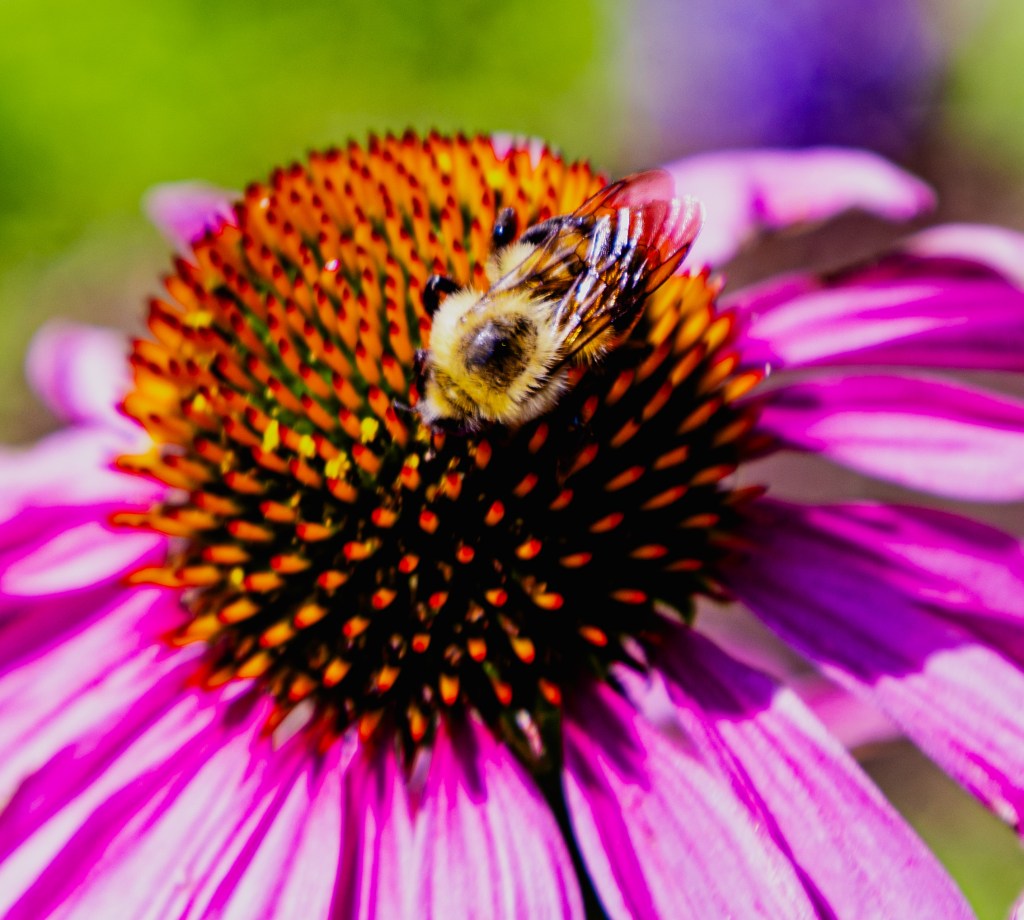
If you live elsewhere, say, Ireland or North Carolina, you will need to complete some regional research to find a list of native pollinators indigenous to your area. Fortunately, this information is readily available. I love Ireland, I can’t wait to go back for another visit. One of things I can tell you about Ireland is they have miles and miles of hedges. You can assist pollinators by letting the hedges grow and produce as many flowers as possible early in the spring.
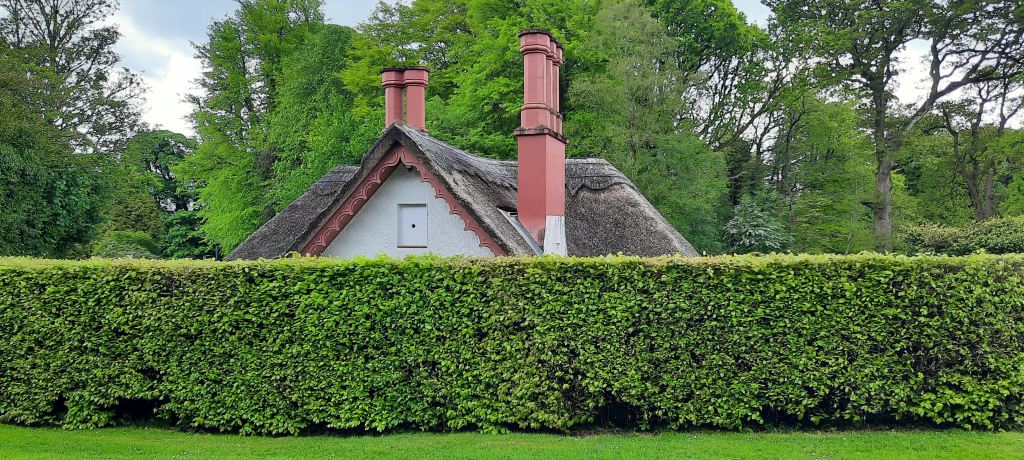
Let’s start with replacing our turf grass with native perennial gardens. Turf grass, including Kentucky Bluegrass, Fescue, ryegrass, and several other niche species, are non-natives everywhere in the United States. Yes, even Kentucky Bluegrass is from a different part of the world.
None of the grasses listed are native to the United States. Cynodon dactylon, commonly known as Bermuda grass, is native to Europe, and Africa, among other places. Bermuda grass does not tolerate the cold. This may surprise you, but it is not native to Bermuda.
Tall Fescue Festuca arundinacea is a cool season perennial better suited to Wisconsin’s Climate though it is native to Europe. Where it is a common forage crop.
Most of us have heard of Kentucky Bluegrass, Poa pratensis. As you might suspect, by this point, it is not native to Kentucky. It is native to most of Europe and parts of Northern Asia, Algeria, and Morocco. Kentucky Bluegrass is also cold tolerant. It is the most popular planted grass in North America. It was introduced in North America early on. It became widespread, and when allowed to grow to its full height and go to seed, it produces blue flowers.
There are more, but we will end our discussion of turf grass by mentioning perennial ryegrass. Which is usually included a component of mixed grass seed. It does well in the shade. It is native to Southern Europe, Northern Africa, the Middle East, and Central Asia.
As we have discussed often, these turf grasses support very few organisms. Though they need regular watering and cutting to perform at their best. They make up what we call a lawn which I have described in various ways, including biological deserts, dead zones, and stupid. I have also claimed they suck when referencing the preponderance of water, they need to look their best.
What’s the alternative? Native plants.
Professor Douglas Tallamy, author of Nature’s Best Hope, and his dedicated graduate and undergraduate students have completed numerous studies showing how dependent the animal life in our area is on plants from our area. White Oak trees provided food and habitat for a remarkable number of organisms. Something to consider if you are adding a tree to your yard.

Often the alien and exotic plants we see at the garden center have signs that read. Pest resistant. As a consumer, that sounds like a positive thing. But as a biologist working to increase biodiversity on my property, it has a totally different connotation. Let me translate for you.
Pest resistant = No insects! The base of many food chains do not feed on this plant. This plant provides no value to my yard beyond looking pretty. Remember 80% of our local bird species eat insects.
Yes, you are primarily buying it because of its aesthetic. But with some care and a bit of knowledge, you can fill your landscape with pleasing native plants and have the added benefit of enjoying the company of birds, pollinators, and more.
Consider the following advertisements.
Beautiful purple trumpet-shaped flowers will decorate the border of your garden. This exotic import is pest resistant and will grow and provide color throughout the growing season.

Fine print – Provide full sun; grows best in well-drained soils. Supply fertilizer and mulch to retain moisture and prevent weeds. Water daily!
Beautiful red, orange, purple, white flowers. Species that grow in varying conditions to varying heights can be used as a border or a focal point of your garden. This native plant provides nectar and pollen for pollinators and a habitat for beneficial insects.
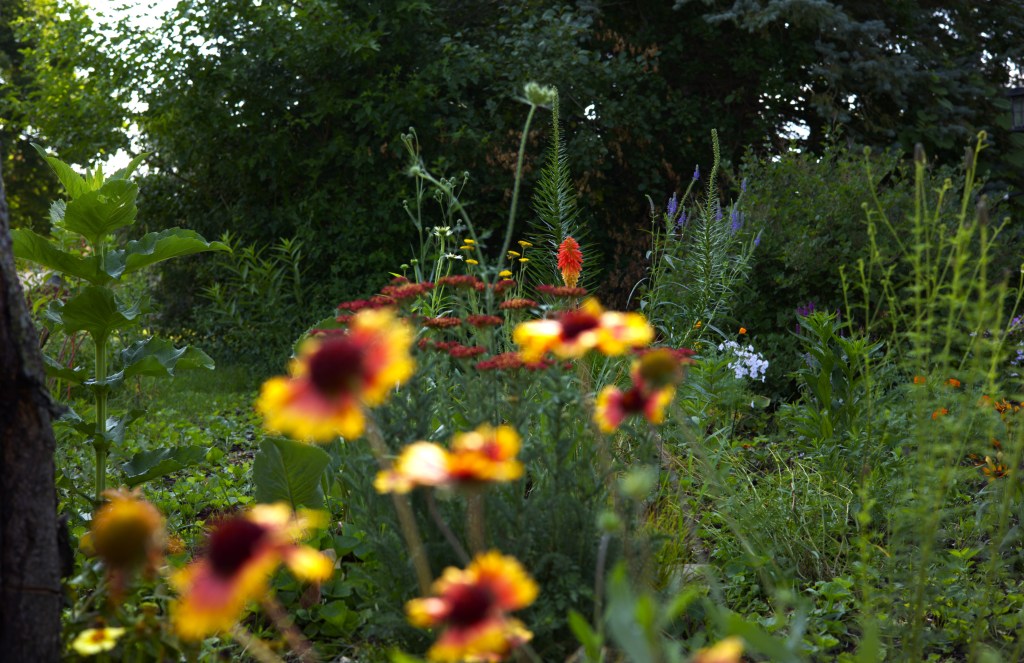
Fine print – This native plays host to several caterpillars, including the Wavy-Lined Emerald Moth caterpillar. These flowers are drought-tolerant and grow in a variety of soil conditions. Not only will you be able to enjoy the beauty of this flowering perennial year after year it will also attract hovering and flying organisms which each bring colorful acrobatic displays to your property. As an added value, you will enjoy the acoustic sounds of buzzing, chirping, and bird songs. In addition, it may very well be the difference between extinction and the continued existence of many native insect species.
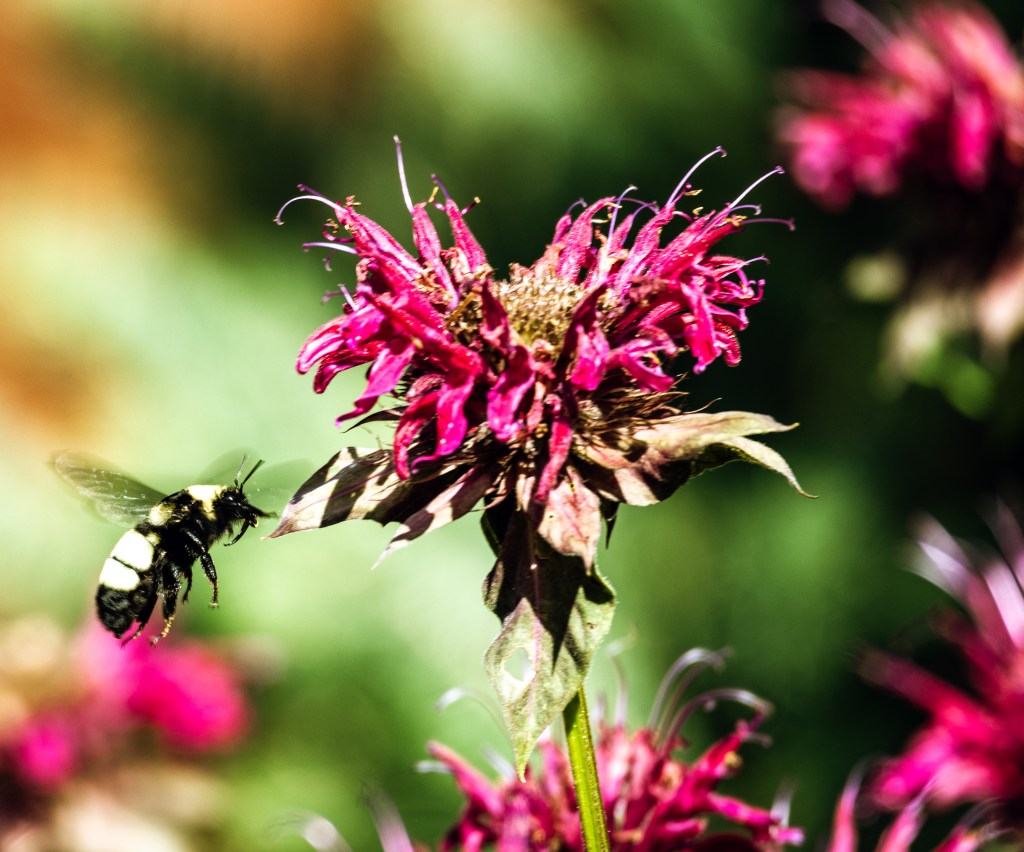
Each week, I will profile a few Midwest Native plant species. Remember, you may need to do some research. Example: native flower pollinator plant in Ireland – Manage your hedgerow for pollinators. Let it grow and produce as many flowers as possible.

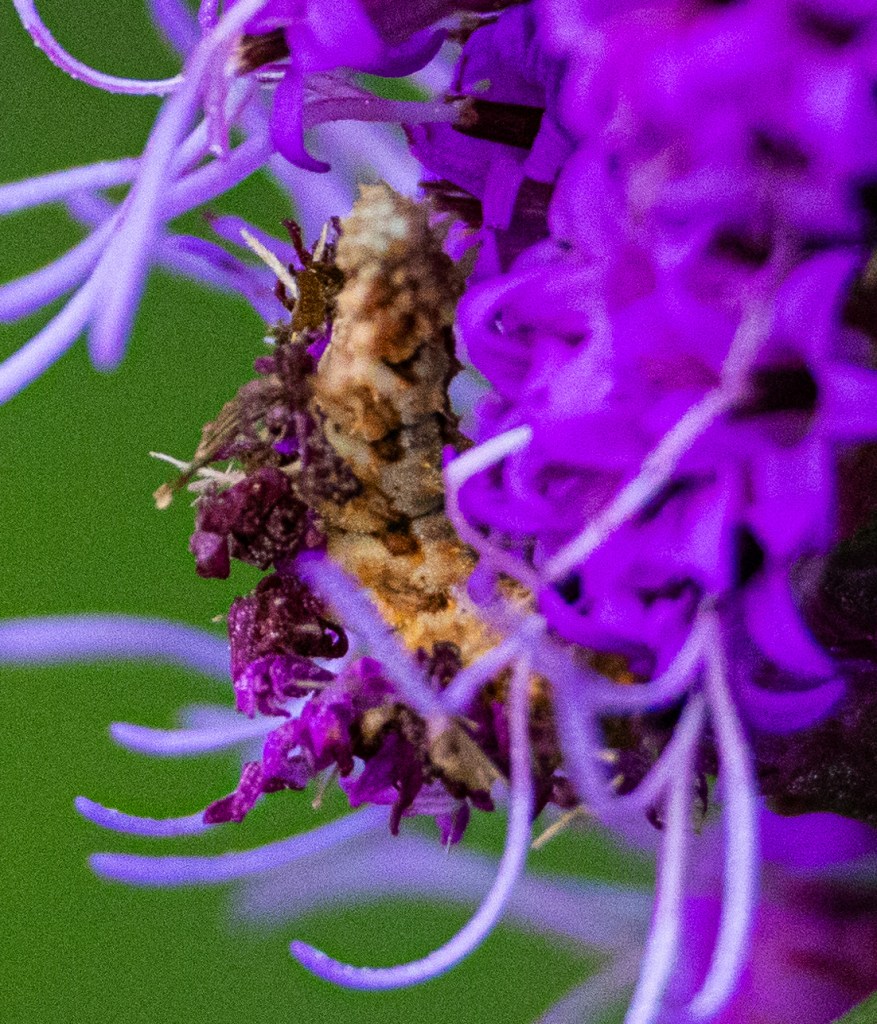
Blazing Star Liatris spicata I will start with this native perennial pollinator because I discovered a caterpillar on one of my Blazing stars last week. The aforementioned Wavy-lined Emerald Moth caterpillar. This caterpillar removes parts of the plant it is currently feeding on and sticks the foliage to itself using a bit of silk, creating its own changeable camouflage. In the picture below, we see it covered in the purple bits from the Blazing Star from my perennial pollinator garden.
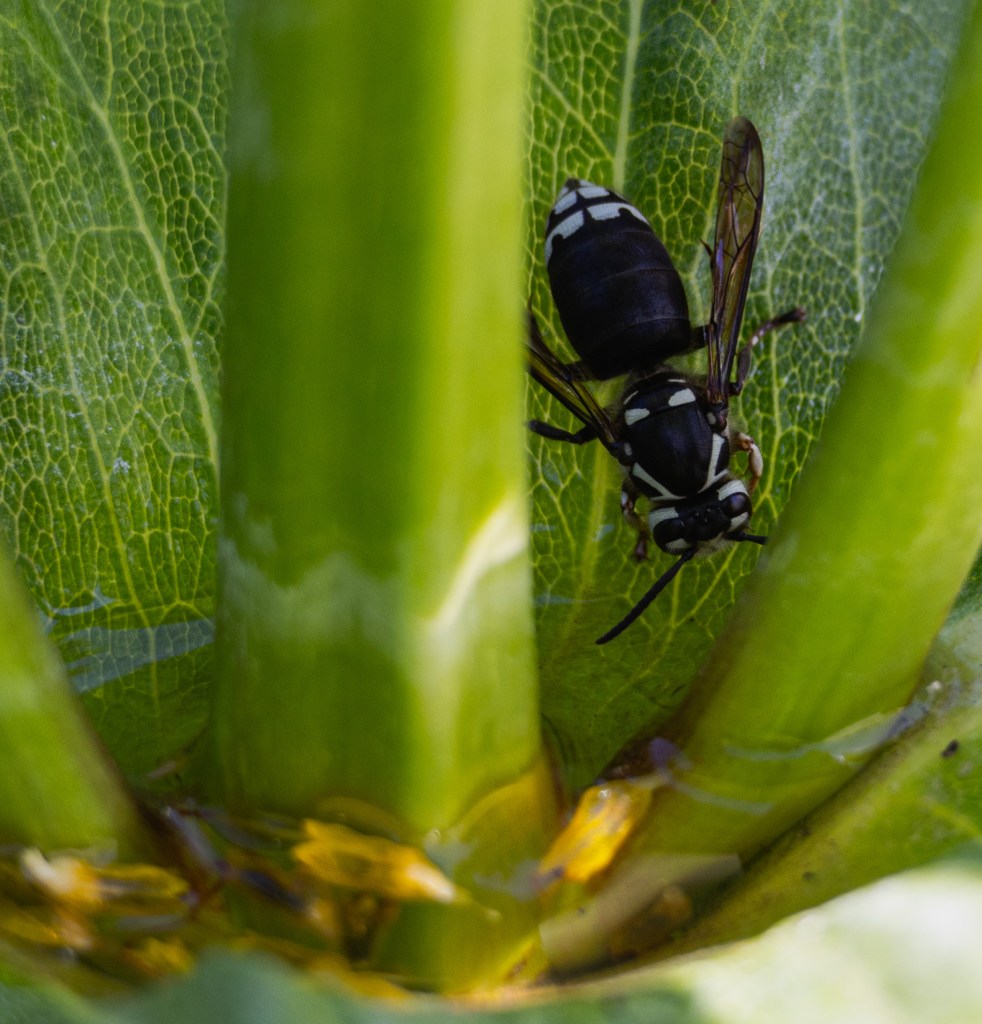
The Cup Flower, another Wisconsin Native, provides nectar and something more. Its leaves are large, and water gathers at the stem where the leaves meet. This provides a water source for insects. They use the leaves as a ramp and can ease down for a drink. The water remains in the small pool for several days after the rain event.

I am always Listening for the Sounds of Summer. I am starting to hear the lullaby of crickets, frogs, and a litany of unidentifiable chirps and chittering from the innumerable insects living in our biodiverse habitat.
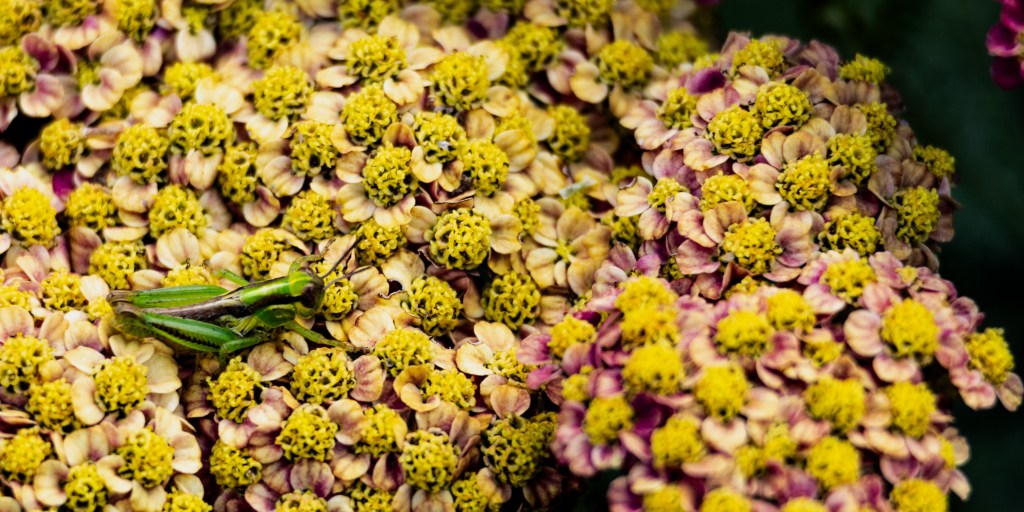
I suspect this fellow and his friends are contributing to the symphony of sound coming from the garden.
Thank you for your support, and I hope you will join me in Saving the Plante One Yard at a Time. Please fill out the link below to subscribe to the website. You can also check out all my work at terryjohnsonauthor.com
 T.L. Johnson
Leave a comment