
Those of you who have been following along or are reading this in the book version will know that I made some mistakes when I first began converting my suburban lawn into a biodiverse habitat. Hopefully, you have learned from my mistakes and even found entertainment from my documenting them and relating them to you.
As mentioned before and discussed in Do as I Say, Not as I Do. I initially simply began letting my lawn go. I had been disenfranchised with the whole litany of chemical applications necessary to keep up with the Guy Next-door. I had quite quit my lawn. My perennial pollinator garden started with me not cutting the lawn on one side of the driveway because I wanted it to “Wild Up.”
This experiment was a partial success. Mostly because I had decided to stop using chemicals on my lawn, I started to see more bugs, toads, and frogs in this area of my property. I even actually liked the look of the long grass.
The following year I had a revelation. I decided to help wild up my yard by bringing in Native Perennial Pollinator plants. As discussed in past articles, this was the start of the Listening for the Sounds of Summer project.
I was so anxious to get started I, as usual, began without taking time to read the instructions. So, typical. Now there isn’t actually an instruction book for beginning a perennial garden, but at the same time, there are literally hundreds if not thousands. This book/blog could be considered one as well.
I was a biologist; after all, I had had classes in botany and horticulture. I read many articles about plants and planting. Still, I missed one important step in creating my garden. I did not remove the grass. I started planting my perennial plants in among the existing established turf lawn, and I might add a kind of weedy area. Remember, I had let it go for several years, only cutting each fall. Well, the outcome was predictable, that is, if you read the instructions in my previous posts.
I have faced an uphill battle with the weeds ever since, and my attempts to seed the area with wildflowers have mainly been a bust. In year two, I brought in some soil and distributed it around the plants as an alternative to removing the grass. Physically I was incapable of removing the grass manually by myself, so I just threw the dirt one small shovel at a time on the areas between plants.
What I should have done was cover those areas of grass and weeds with cardboard first, then soil, and let it sit for six to ten weeks. But I didn’t want to wait. I am not known for my patience.
Make sure to kill the grass before planting your garden!
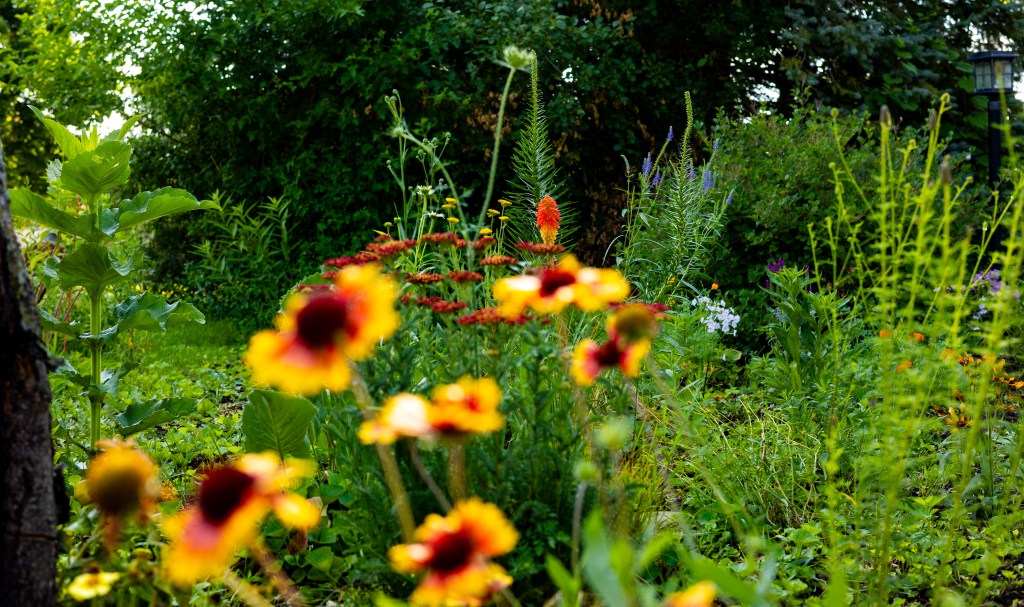
All gardeners battle weeds. Hoeing and weeding are all part of the gig. My wife constantly sings the praises of weeding as therapeutic and meditative. God, love her. Still, it would have saved me some weeding time if I had done a bit of research before starting the garden.
My wife and I have had our difficulties when it came to weeding. As I have discussed several times, my wife likes straight lines, the symmetry of borders, and the organization of a well-weeded garden. So much so that her overzealous approach has lost us some ornamental plants over the years. She can get carried away at times with her weeding. Suffice it to say since we started the project, she has been an interested student in identifying weeds.
“Is this a weed?” “How about this one?” she asks as we move about the garden, plucking out the undesirable plants.
She has come so far into the world of “letting it grow” – that when I say. “Yes, that is lambs’ quarter,”
She asks, “Are you sure? It looks like it could be something cool.”
I stifle the urge to remind her it is something extraordinarily cool. That particular plant is carrying copies of DNA that have been copied over and over for billions of years, and against all odds, it has survived and is here in our yard. Cool right!
Now pull it up and throw it in the pile.
That lambs’ quarters (Chenopodium Album) is also called wild spinach and is considered nutritious and delicious. Oh, it’s also called pigweed or baconweed And yes, pigs love the stuff. And I love bacon. I first read pigs liked it and that it was called pigweed when reading fellow Wisconsinite author Mike Perry’s book called Coop.
Later she asked me about another weed, “Oh, that’s just a plantain. “No, I don’t think it’s related to the banana thing.”
“How do you know?” she asks.
“Well, I don’t, but it is nothing like a banana, and we don’t live in the tropics,” I said.
“But you don’t know,” she correctly observed.
“I’ll look it up,” I say, and I do.
I did. Think of plantar fasciitis instead of bananas. Its name is derived from the Latin “Planta” meaning sole of the foot. I mean, the leaves grow flat to the ground, I guess. Oh, well, I am sure those early people were pretty busy, you know, having to name everything, we can expect they have some duds in there. Interestingly some sources reference Native American’s calling plantain “White Man’s Footprints,” which makes sense as it is from Europe and does well in disturbed soils. Still, I wonder about the veracity of the claim. Too on the nose, it would seem. The Latin name has to do with feet and then it is named a footprint. Makes me skeptical but remember I am a jaded old man with a lot left to learn.
Below are pictures of common weeds that occur in my area, in fact they all occurred in my yard. There are so many that I will only post a few today.
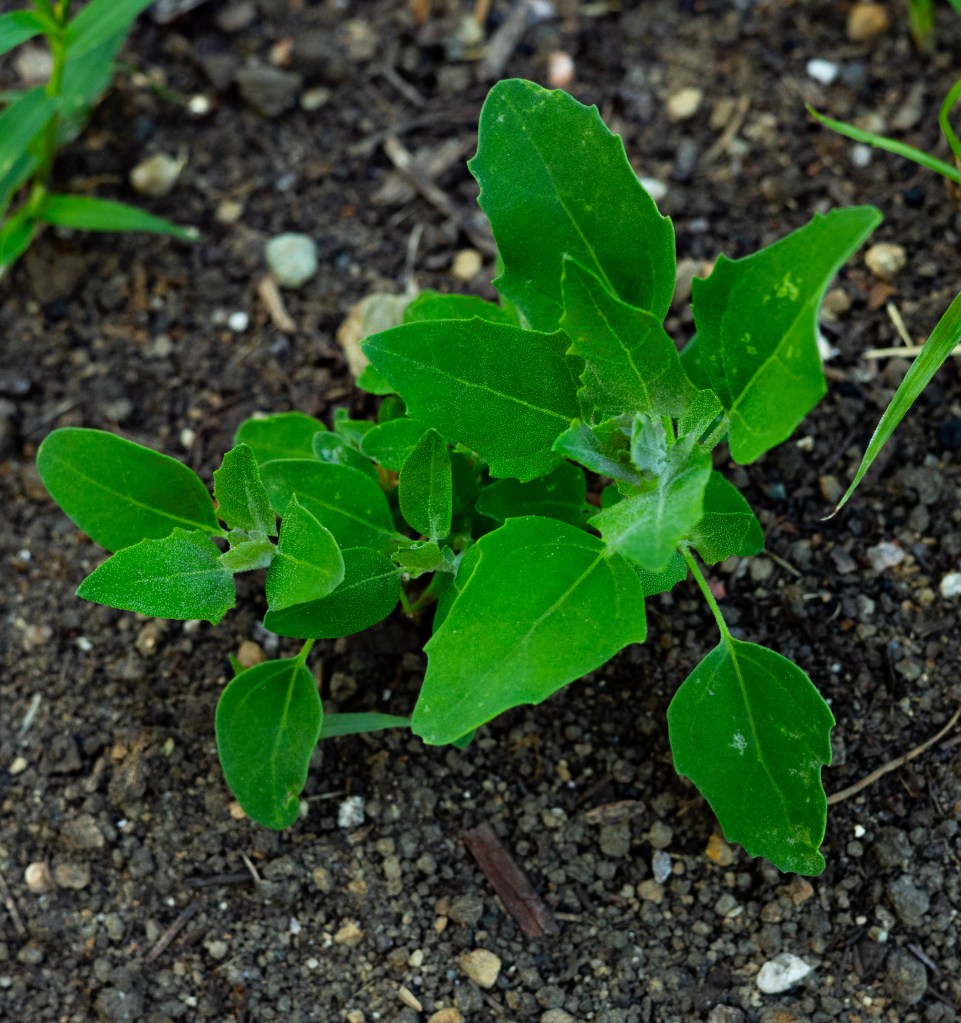
Here is lambs quarter. (Amaranthus) It will get quite big if given the opportunity. Another ‘Weed” that is edible. If you don’t use chemicals on your lawn. (recommended) Put it in you salad. Yum!

Plantain. I do not see the foot or feet referenced by the Latin. Though White Man’s Footprint makes sense.
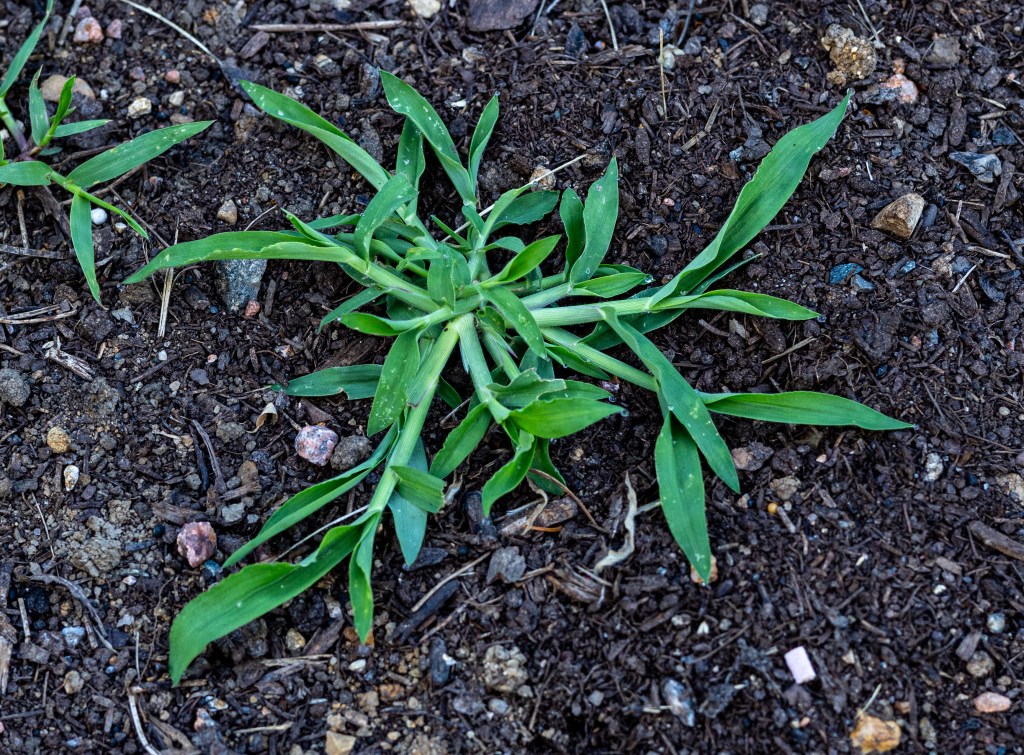
Crabgrass (Digitaria sanguinalis), Grown in Europe as a cereal crop in the 1800s. Brought to America to feed foraging livestock. Crabgrass, grr. Okay, so it is an early emerging plant. Its strategy is to start to grow in your lawn before your grass really gets going. Lawn chemical companies advertise the application in early spring as a feed and weed product. Don’t buy it… both literally and figuratively. Because it will also kill your dandelions. Which are essential early season nectar sources from our pollinators. Crabgrass likes dry hot soils. To help restrict the crabgrass, keep the lawn healthy. Water, apply slow release organic fertilizers and don’t cut the grass too short. Read Giving Dandelions Their Day in the Sun.
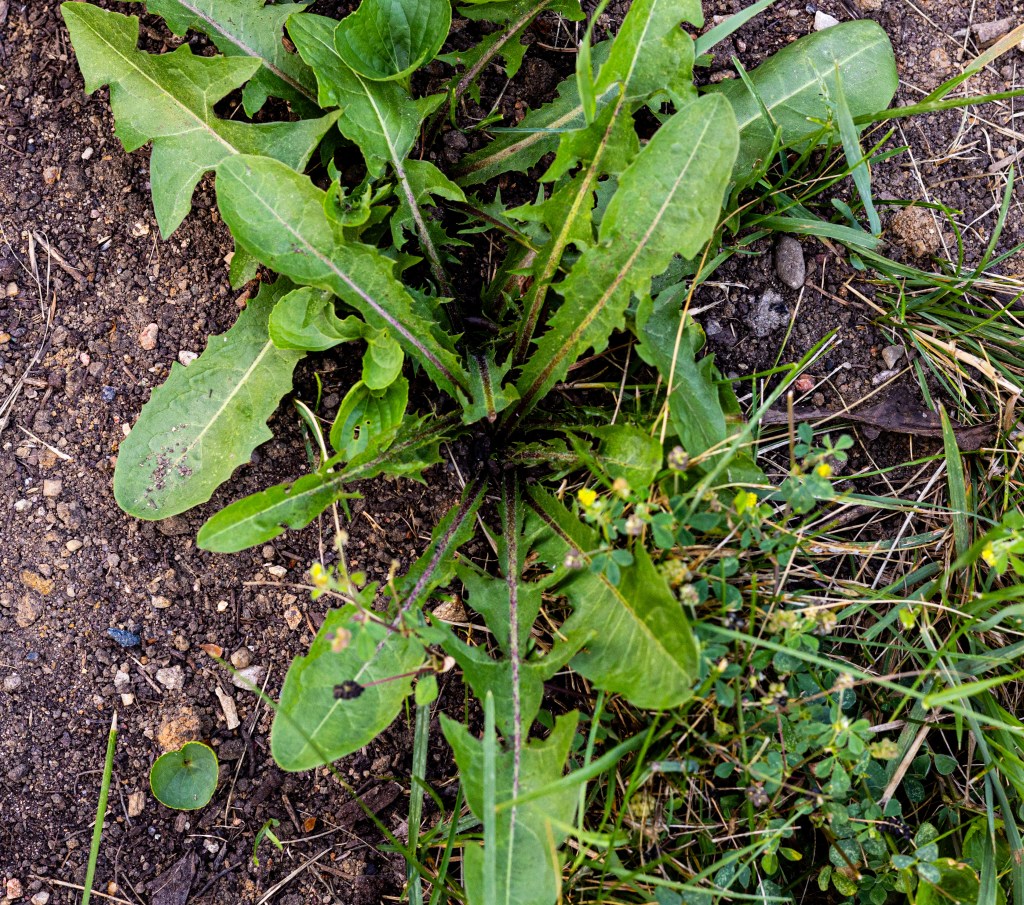
Dandelions! What! Okay. As you know I do not consider dandelions as weeds in my lawn. but when they are in my garden, they are weeds.
Definition of a weed: A wild plant growing were it is unwanted or is in competition with cultivated plants. So, any plant that is not growing where you want it.
Dandelion in lawn. Wanted, not a weed.
Dandelion in my perennial pollinator garden or vegetable garden is unwanted and therefore a weed.
In earlier articles I mentioned my approach to dandelions. Let them have their day in the sun. they are early emerging nectar providing flowering perennials. If you follow my advice you should have them all over your lawn for about three weeks in early spring. Then as long as you provide a slow release organic fertilizer in the spring your turf-grass will outcompete the dandelion for the remainder of the summer. My lawn is full of the yellow flowers in June and absent the remainder of the year.
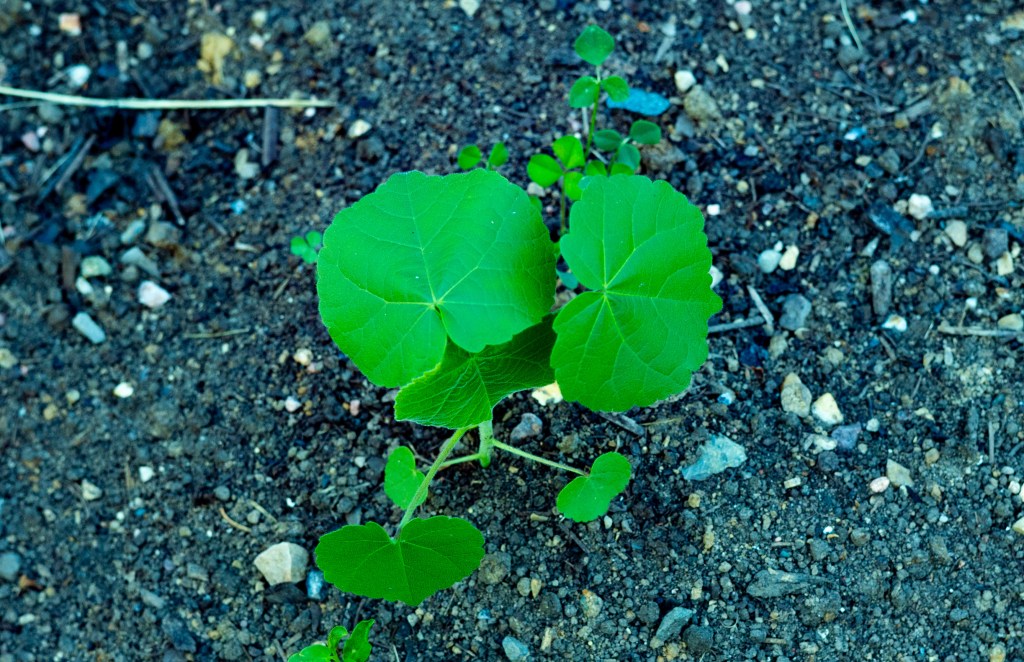
Chinese Jute. This is a seed contaminant that first appeared with this springs shipment of top soil. It is invasive and a detriment to soybean and corn farmers. It grows quickly and tall. The plant is grown in Asia to produce oils, fibers and paper. It is also edible. But you should remove it from your garden here in Wisconsin so it does not spread.

To get further into the weeds with weeds, our next example is definitely not a weed. Or is it? Black Walnut. Yep the tree. Just like the two beautiful ones I have growing in my yard. Walnuts come from Walnut trees. Go figure! Some years hundreds of walnuts will fall on to our lawn from each tree. One year we decided to move a shed to a different location and when we removed some of the plywood on the inside of the shed we found the space between the outside boards and the inside plywood had been used by squirrels to squirrel away their collection of walnuts. There were hundreds of them stacked in there.
Now, I collect them and place them around a stump that sits in the middle of the yard. As the year goes on they slowly disappear. All that remains is a bunch of walnut shells from the nuts the squirrels deemed ready to be eaten. The others I imagine are somewhere stuffed away in our neighbors sheds. I know quite a few get buried in my gardens because every year I have sapling rise up from the ferns, day lilies and pollinator garden. At this point it is a weed.
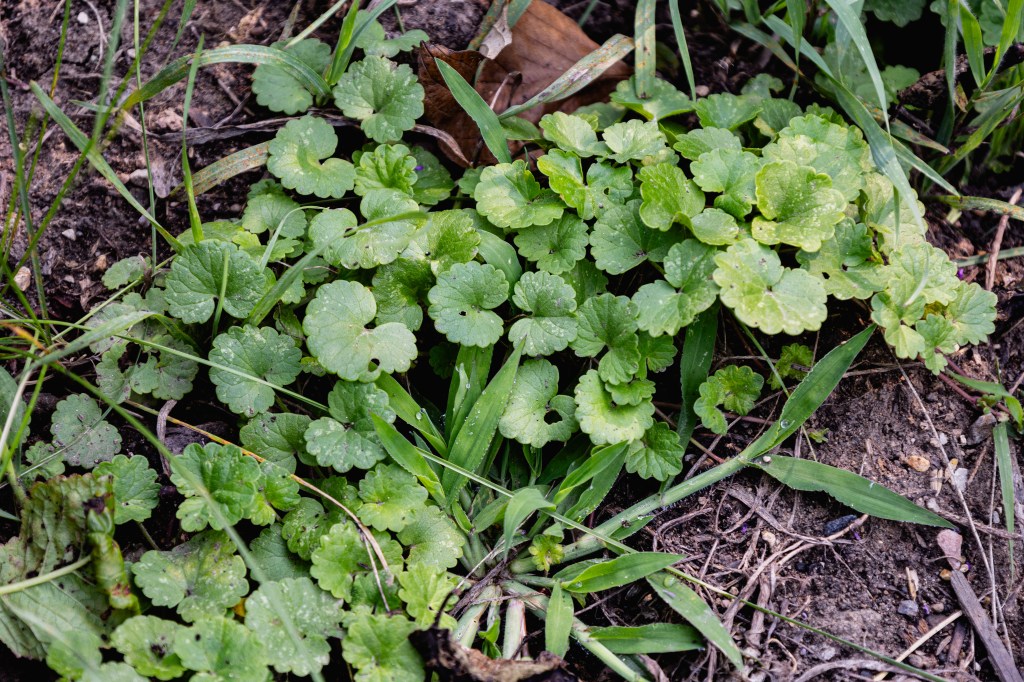
Creeping Charlie (Glechoma hederacea) My personal nemesis. I pull by hand and admittedly do enjoy when I get a hold on a long tendril and pull the whole thing from the ground in one tug. Still they are a pain. The good thing is they really only do well in disturbed soil and thrives in moist shady areas. It usually is not a problem in a healthy lawn. Of course, when gardening we are often disturbing the soil. So, I keep pulling!
There are so many that I will only post a few today but rest assured I will post a Weed a week moving forward. Do you have a weed that is your nemesis? Let me know in the comments below. Also if you want more information on a weed I have yet to discuss. Tell me what it is. Scroll down to subscribe and thanks for all your support.
 T.L. Johnson
Leave a comment