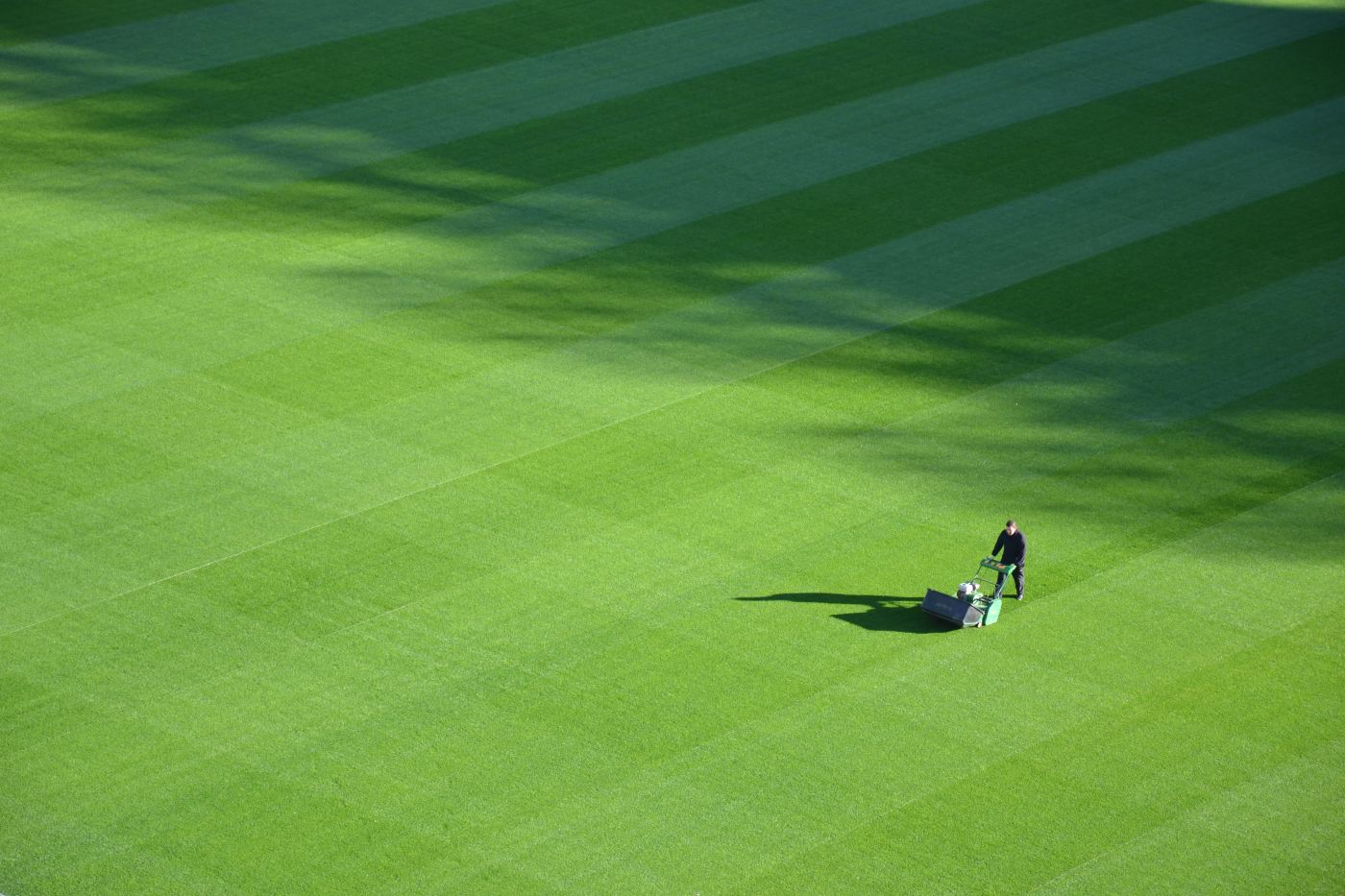
For those of you who have been reading the weekly articles, it will come as no surprise that I am not a fan of turf grass lawns. Frankly, I think lawns are, at best, a waste of time, money, and resources and, at worst, an environmental hazard and ethically indefensible. I have talked some about the plan to convert my yard from a turf grass lawn to a biodiverse habitat. I have attempted to of the successes and insights (How I messed up.) and tried to relate just how satisfying the results of my first summer of listening for the Sounds of Summer were.
In this week’s article, I will discuss the evidence in support of my conclusion – that Lawns are Stupid.
Lawns are Stupid!
We started this project in earnest in the spring of 2022. Though to be honest I had been quiet quitting my lawn for at least the last five years. At the beginning of this project, we looked at my lawn and compared it to the Guy next door’s lawn. I chose the comparison because of its logical juxtaposition; after all, it is right across the street. Plus, when you look at those pictures from early spring 2022. Yikes! On the right is a picture of my lawn after years of quiet quitting. Minimal care, only mowing. At the end of today’s article I have posted pictures of the lawn today.
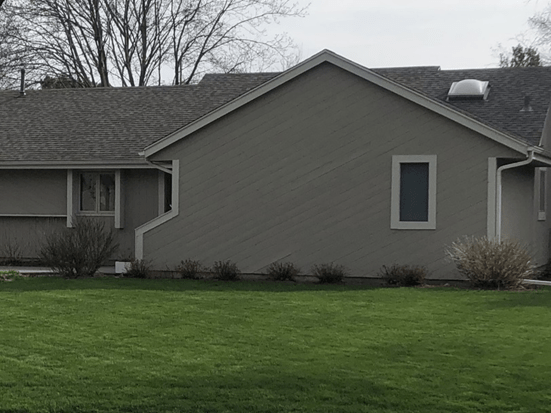
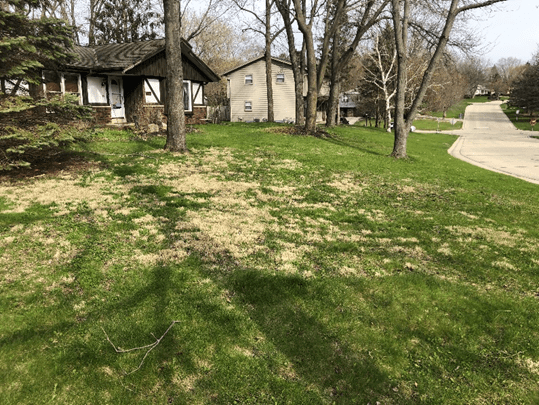
Two decades ago, when we first moved into our home, the idea of a lawn was so ubiquitous and held sway so firmly that I fell for it without thought. And in last week’s article, I admitted to the world that I was, for over a decade, That Guy Next Door. I didn’t really even consider an alternative.
I have since learned there is a better way. We can all make a difference for every level of commitment and yard size, from acres to patios.
In fact, I would go as far as to say I am anti-lawn. I will give voice to the science behind good lawn stewardship. There is such a thing. A way to have a lawn that is less negatively impactful to the environment. But I will say that even a turf grass lawn that limits pollution to the surrounding environment is still a monoculture that supports almost zero living organisms. We can do better.
So, when I say I am anti-lawn, it is because they are unsustainable and contribute to the degradation of the environment and the health of ourselves and our families. And even when properly cared for, they contribute practically nothing to the biodiversity around us. At best, they are Silent voids of green. At worst, they contribute to the pollution (eutrophication) of lakes and streams. They are producing vast Dead Zones in our oceans. They contribute to climate change and the depopulation of beneficial insects due to habitat loss and poisoning through pesticides and herbicides.
Lawns are empirically a stupid idea and, in practice, a monoculture. A single crop created at great expense to the world, its people, and the environment. I will now attempt to prove and persuade you. I recognize those are two very different things, but I believe I can accomplish both because for one thing – I was that Guy next door with all the accompanying pride in my lawn. I made the change, and my life, my yard, and by extension, the world around me is the better for it. And secondly there are better alternatives that cost less in terms of time and resources.
Rarely do we have the option of Better and Cheaper.
The Guy next door is incredibly proud of his yard and works extremely hard to maintain the lush dark greenery. He spends hard-earned money on buying yard equipment, gasoline to power his equipment, and chemicals to ensure the greenness and lushness of his lawn.
And I can understand how one becomes deeply invested in the maintenance of their lawn. But the elevation and importance of a lush green lawn is a modern human construct. We currently equate a proper yard with a green lawn to ‘having made it.” – a lush green lawn has come to represent prosperity, but in reality, they are barren dead zones.
A year ago, my own lawn had become a hot mess. It was primarily light green, speckled with blotches of light straw-colored vegetation. I became disenchanted with the return for my investment on my lawn. My change of heart was largely due to a complicated contemplation of my contribution and impact on the world. Experiencing deep generational angst and guilt over the calamity that has befallen the natural world during my lifetime. In other words, I had quite quit my yard, and it was starting to show.
A decade prior, I approached my lawn as any Guy would. I started with a mower, grass seeds, water, and chemicals. Eventually, I felt terrible about using chemicals to kill everything that got in the way of my producing the perfect lawn. I also began to contemplate the consumption of fossil fuels when mowing the lawn, running the sprinklers in August, and wasting all that water. But this realization came slowly and in a progressive transition in which I began to let the lawn fail as a lush green space. I had no plan. I simply knew I didn’t want to kill everything to produce a yard full of turf grass.
That is when I came up with my plan, to build a better yard. Save the World One Yard at a Time. I understand I wasn’t the first to come to this conclusion. As I said before, many voices were out there banging the drums. My contribution is writing about my experience and persuading others to join me in Listening for the Sounds of Summer.
Guys’ lawn is green. It is plush looking and probably a treat for bare feet and or rubbing one’s bar flanks upon its extraordinary softness. You would have to ask Leroy and Scooby, our dogs, about that.
Remember when you were young? Running barefooted through a soft, lush green lawn. The coolness of the grass and its softness beneath your sole or is that – soul. I believe it’s partially that image, that dream, that drives the desire for a finely manicured lawn. Though, now that I think of it, I have never actually seen anyone walking barefoot, luxuriating, or rubbing their flanks through Guy’s grass. Just Guy pushing his lawnmower back and forth in alternating patterns twice a week whether it needs it or not.
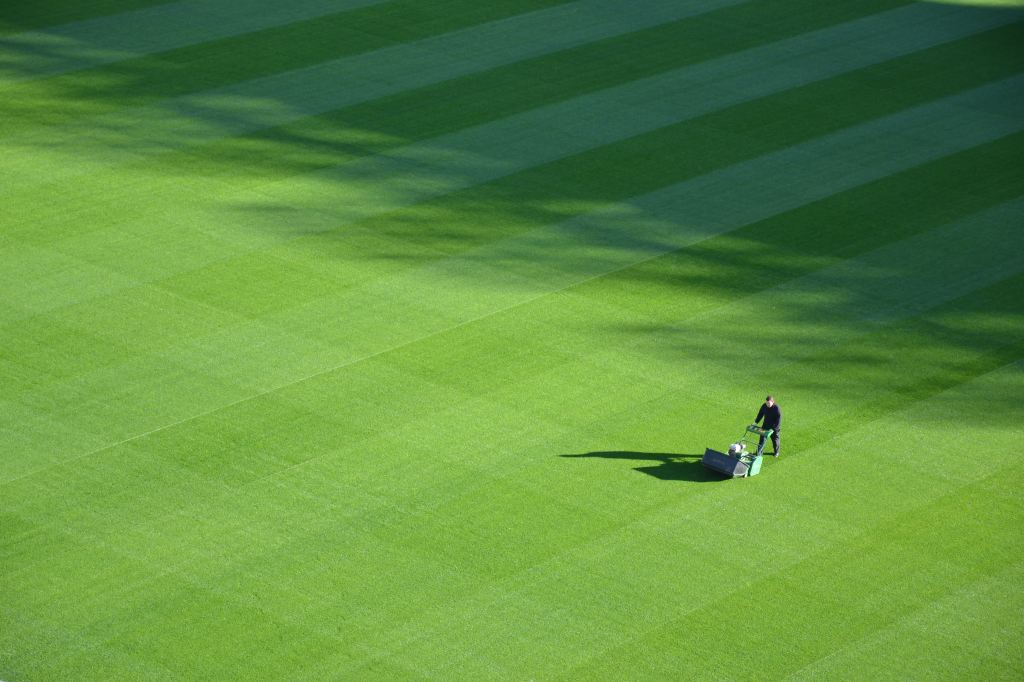
On a typical weekend, lawn owners across the United States can be seen cutting their lawns each and every weekend during the spring, summer, and even into the fall months. This year Guy mowed his lawn in January. (I kid you not.)
The cutting is often but not always followed by the raking of the clippings, the bagging of said clippings, and finally, the transporting of the clippings to the city lot where they are deposited. Later in this book, we will look at what becomes of the stuff we get rid of. Spoiler alert. Nothing good.
I know it’s spring again because my wife has reminded me just as Guy once did, in a friendly neighborly way, that the appearance of our lawns, his, mine, and the neighbor’s (known to those of us living on this block as the hairy-backed, shirtless, potbellied, bearded German guy, or Dennis for short) lawn affects everyone’s property value. Oh, commerce, what a valuable tool for measuring human achievement. After all, you can’t take it with you. But you can consolidate a massive pile of it, form a trust and then funnel it to members of your tribe.
While my wife understands property values and everything else considered practical at a deeper level than I do, in this instance, her interest is purely about the looks of the thing. She mostly just doesn’t like the aesthetic of our brown, patchy, scraggly lawn. She doesn’t care for the look of weeds. I get that.
She looks at the yard and sees grass struggling to survive and weeds prospering.
When I look at the lawn, I see plants struggling to survive. And weeds are just plants, after all. And I think, way to go, plants!
I look at Guy’s lawn and contemplate the number of chemicals needed to maintain that type of weed-free, lush, and green landscape. Knowing what it really represents makes me look at it in a totally different light.
Not to mention the fact that he mows that lawn multiple times a week during the growing season. Even going so far as to mow twice. Once to cut the grass and once, adding a roller to get the proper pattern. Symmetry and aesthetics at all costs.
I live in the Northern Midwestern state of Wisconsin, so the growing season feels like it lasts about a month, but in reality, his frequent cuttings add up to approximately 45 mowing’s a season. Though there is growing evidence that my neighbor Guy exceeds this average number. Check out Guy mows his lawn twice – just in case he missed a spot, hypothesis.
According to one Swedish study using a gas-operated lawn mower for one hour is equivalent to taking a 100-mile drive in your car. So Guy’s lawn mower uses enough gasoline each year to drive from New York to L.A. and back again. Or traveling your average morning commute to work and back 140 times (The average commute is 16 miles one way).
Now multiply that by the number of lawns. Sorry, I don’t know the number of lawns in the U.S. But the best estimate of lawn coverage in the United States is from 2005. Thanks to NASA, it was estimated there were approximately 40 million acres of lawn in the lower 48. Using 63 billion gallons of water a day to maintain. In 2021 9.1 million new lawn mowers were purchased. I let you do the math on how much gasoline is used to mow all those green dead zones.
I think about how many insects must die from poison applied to protect the precious fescue or starve from trying to make a living in a dead zone of turf grass. Not to mention the amount of fertilizer applied to the lawn. The majority of which ends up leaching into the local creeks, rivers, wetlands, and lakes. Americans use ten times more chemicals on their lawns than farmers apply to their crops.
Sorry, that is unbelievable. In case you missed it, I’ll start a new paragraph with that fact. I repeat.
Americans apply ten times more chemicals to their lawns than farmers do to their crops.
That is, Americans use ten times more chemicals on our lawns than farmers do to their crops. That is a crazy statistic.
Lawns are also the most irrigated crop. Homeowners use more water on lawns than farmers use on their crops.
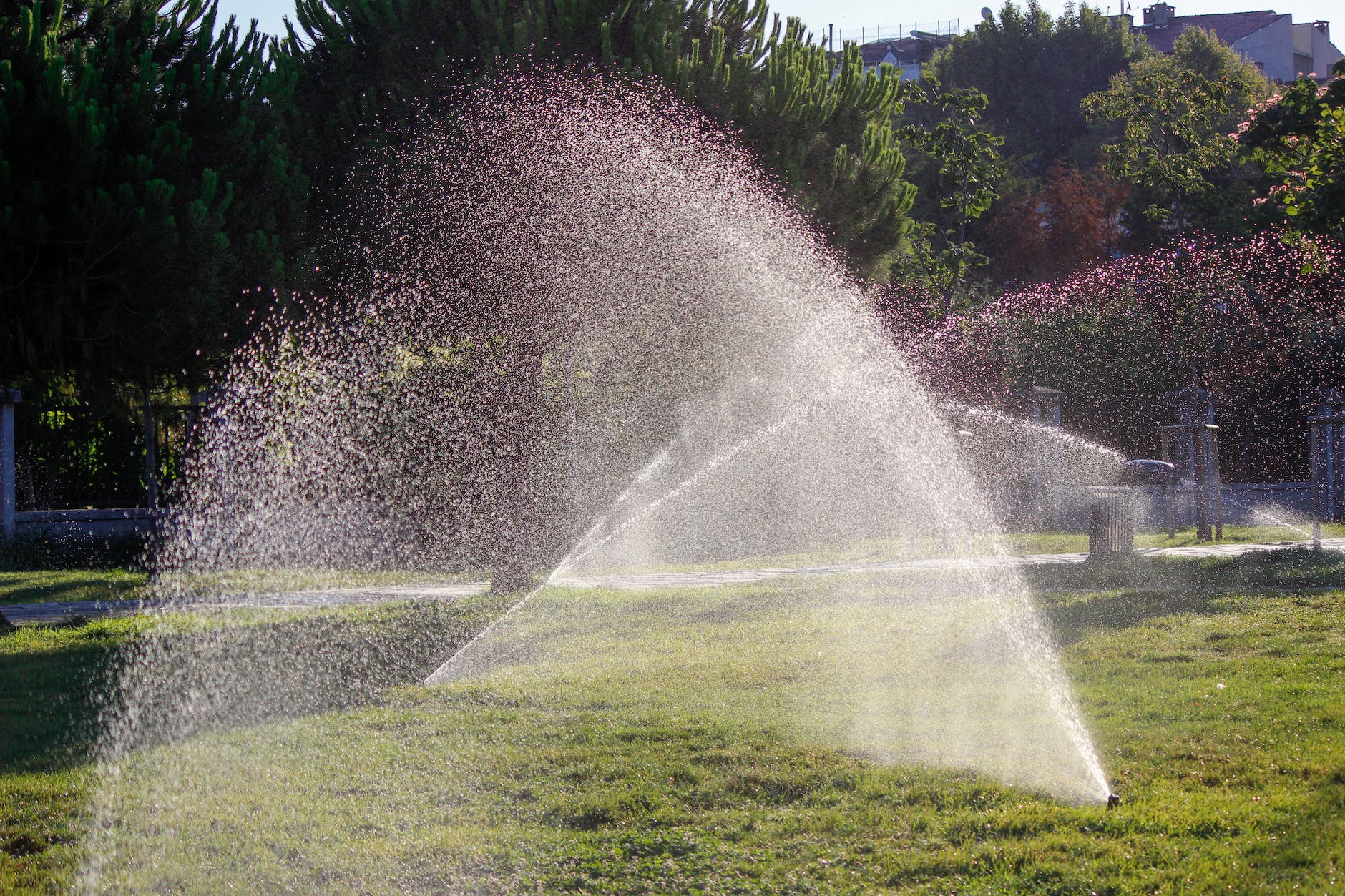
Look around, take a drive, and look around. Better yet, take a walk or a bike ride and look around. Lawns are everywhere; they are ubiquitous. Here in lies the purpose of this blog/book.
If I do my job adequately, you will no longer be able to drive down your street without noticing something you took for granted all your life. As you drive along the boulevard, avenue, or Elm Street and enjoy the serene scenery of shade trees dappling the sidewalks that border the multitude of expansive lawns, it is my hope you will see those lush green lawns for what they truly are. Deserts and Dead Zones.
Monocultures of on useless Turf grass. I now gaze out the window of my car, and I am enthralled and appalled by what I see.

But after starting this project and doing the research, I now look over the green turf and see a biological desert. A biodiversity wasteland and, worse yet, one that is a black hole that sucks in resources and spews out Hawking particles of toxins that entangle even the farthest distant shores in its environmentally destructive embrace.
Okay, that was a bit dramatic. You will have to forgive me; I am a writer, after all. Perhaps further analysis will be helpful, one chock full of facts instead of prose. The amount of turf being grown in America and worldwide is astounding. Especially when you consider that very little biodiversity is sustained on the most grown crop in America. And I remind you, it is a crop not used for human consumption but simply as a way of keeping score. When you start looking around, you will begin to get an itchy suspicion that something has gone wrong. Somehow we’ve taken a wrong turn, chosen the wrong path. But there is hope, we can choose to do better.
I now have several gardens or plantings of native perennial. Chosen to provide food and shelter for indigenous organisms. I have a areas designated as bee lawns and I still have a lawn on my property. But i don’t use chemicals on my lawn and I welcome the dandelions in spring. Here is what my lawn looks like this year. You will see it is green and inviting. check out my articles to learn how I have accomplished this feat.
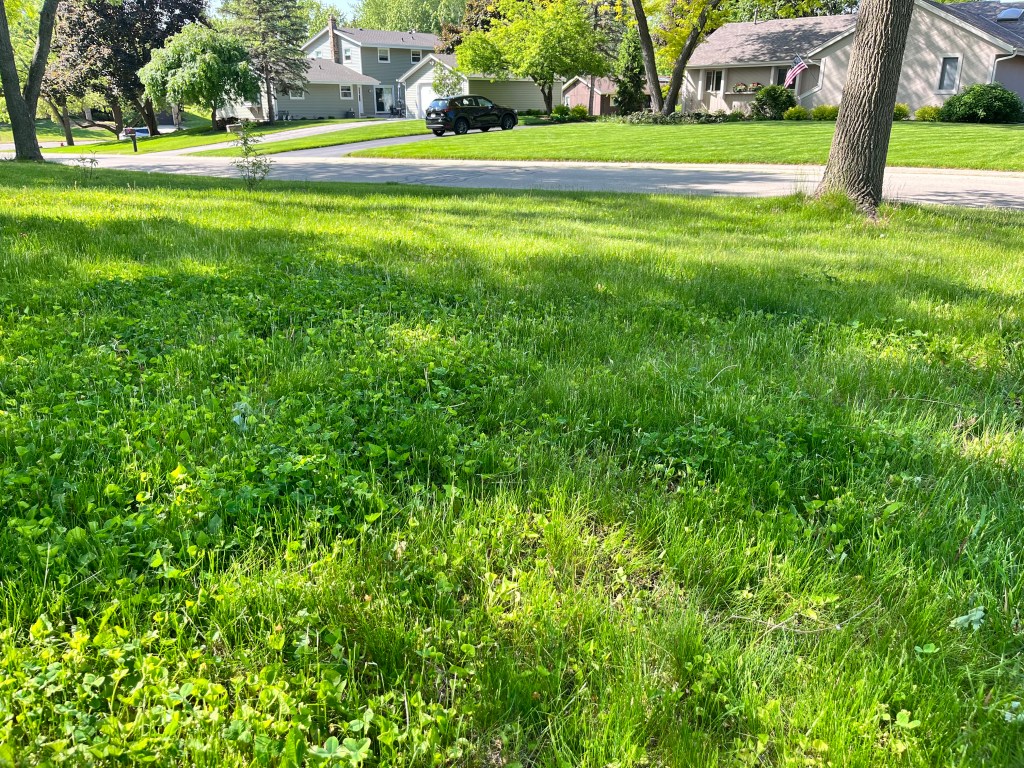
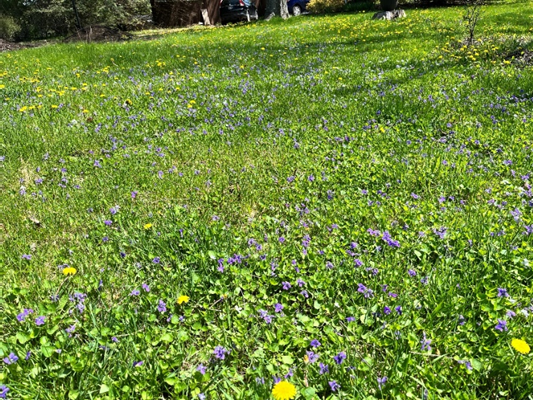
What can you do? You can start today. Stop using chemicals on your lawn. Plant a native perennial. For more information on converting your lawn to biodiverse habitat. Please check out Terryjohnsonauthor.com to see all my work. You can also subscribe here on this page or on my author’s website. Let me know your success stories, and if you have questions, I will do my best to assist you.
 T.L. Johnson
Leave a comment