
John’s my neighbor, – the guy next door. Remember his front yard. Well, his neighbors and his neighbors, neighbors yards all look similar, just less perfect. Still, all green, and not a weed in sight. There’s green grass as far as the eye can see. The turf grass stands alone. And this is not by accident. It has taken time, money, and a massive amount of resources.

John’s my Guy next door. But I was also once the Guy next door. I was trained to fertilize my lawn in the spring and fall by a friend named Jim. In honor of all the guys next door, we’ll call him Guy. To Clarify, Guys, – stands for a neighbor who cares for their immaculate lawn and does not denote gender. A guy, in this case, can be a male or female.
Well, Guy taught me the rules about lawn care. It all started while we were sitting in our friend’s backyard enjoying a BBQ on a beautiful Wisconsin summer day, and they asked if we would want their cherry tree. They, for some reason, and I can’t for the life of me, think of why, but they wished to get rid of this five-foot healthy, nice-looking cherry tree. Terri and I just looked at each other and said, yes. Well, as you can see, it took to our soil and our home just fine. The petals have been falling all week since I began writing this article in late April. What a beautiful sight. Sometime in June, I will be picking handfuls of Cherries! The ones on the branches way up high are literally for the birds.

We had just purchased our first home. (And, more than likely, our last.) They had been to visit at our house a few times, and I remember trying to decide if I should be offended when Guy offered a few bags of fertilizer to help my lawn get going. I mean, come on. It’s my yard. I can take care of my own yard. Can you smell the insecurity? Or is that masculinity? (Deep in sight or just word play.)
Challenge excepted.
The following spring, Terri, my wife, suggested we invest a bit more time and money into improving our lawn. I being a biologist, took this as a personal challenge. Certainly, I understood the principles of plant growth and care.
So, I inspected the yard and made my plan. I dutifully fertilized the lawn and then overseeded the portion where it received adequate sunshine. I planted shade-tolerant grass in the well-shaded areas where the existing grass had struggled to the point of compacted dirt. I aerated and filled in low areas with quality topsoil before spreading seed and straw. Then began the daily double ceremony of sprinkling the lawn.
Next, Guy explained I needed to feed and weed my lawn to eliminate the dandelions. This is a combination fertilizer herbicide application that takes place in early spring. We will speak more about weeds in future articles. You can check out more articles by checking out the archived articles. You can also check out all my writing at my Author website, Terryjohnsonauthor.com.
And later, Guy taught me how to kill the grubs that live in the soil in my yard and the early emerging weeds such as dandelions and crabgrass as well.
It wasn’t that Guy was the keeper of the lawncare secrets or a lawn whisperer. It’s just that he knew more than I did. You see, all Guys know how to care for their lawns. How do all Guys know about lawns, you ask? Well, I’ll tell you.
What all the Guys know about lawn care is that there is a spray or chemical that will help with any problem.
Guys have learned a wealth of information from the sacred source of all that is lush and green. The lessons are taught by the chemical companies that supply those products. We’ve all seen the commercials. And if you do a Google search for lawn care, the advice you will find will focus on the application of synthetic fertilizer and chemical treatments.
I found a plethora of information available on how to solve any problem and clear any obstacle in my way to creating a lush green dead zone of turfgrass. The local hardware or plant store had a spray designed to kill anything considered undesirable. Having a background in chemistry and biology enhanced my understanding of but also my interest in just what I was directed to use. It was so easy. So, so easy. Too easy, really. When you stop to think about it.
Kill everything that gets in my way!
To achieve a green lawn!??
I began to feel squeamish about the whole thing. Though also, I must admit to being a bit proud of how the yard looked.
And if a Guy doesn’t want to spend the time learning the secrets, they can spend the money on a lawn service. This makes it even easier, and Guy is one step further removed from the environment.

Though it is heartening to see there is a wind of change blowing. Last year when I started, only a few lone voices were howling in the wilderness: David Goulson, Silent Earth, Douglas Tallamy, Nature’s Best Hope.
This spring, you see the articles in Better Homes and Gardens and Martha Stewart, from fringe to the mainstream, to Mainstreet.
Well, not so fast. If you look around, at least in suburbia, you will still see green lawns for as far as you can see, and the sound of lawnmowers fills the weekend with their noise. In fact there are many more lawn service poison signs popping up in the lawns in our neighborhood. Which is anything but neighborly.
Guy Next Door – I hope its okay if I poison my yard each week or so. They say it is safe as long as you avoid touching it or consuming it. So, I am just going to set out these little white signs that speak to the poisonous material that was applied. it will go away in a few days. I mean most of it seeps right into the ground. You know it goes away.
There is no away.
Runoff – rivers and lakes.
Leaching – ground water.
homeowners apply more than ten times the chemicals on lawns than farmers do on all the food crops they grow. This is to grow dead-zones of turf grass.
My subdivision has made some progress. No one else is planting perennial pollinator gardens, but there are yards this spring with dandelions. And that, my friends, is a big Win. Last year, only two other yards in the neighborhood dared let the Dandelions have their day. I discuss this further in Giving Dandelions Their Day.
Back to John, next door, he’s a hard-working, upper-middle-class Joe. Well, a hard-working, upper-middle-class John. No, not that kind of John. I mean, he’s an average everyday guy. His name happens to be John. And I did not know this when I started working on this project, but John is a genuinely lovely guy. And don’t let his front yard fool you. His backyard is buzzing with bees. Remember the old chestnut about judging a book by its cover?
Speaking of chestnuts, did you hear the one about what happened to all the chestnuts? Sounds like a setup for a joke, doesn’t it? But it’s no joke. It is pathetically sad, prophetically telling, and, one would hope, a story that would inform our future behavior. Though it happened before, it happened repeatedly and will likely continue to occur in the future. Still, I hold out hope for when we will finally learn our lesson. cliché – Hope is something powerful and should not be given up lightly. Instead, hold on tightly. Let it shine brightly. Who knows, it might spark something amazing.
Okay, so I searched for jokes about chestnuts. You know, I thought this would be a good time to lighten the mood. When you think about the word chestnuts, for a moment, I think you will understand that most of the jokes I found were in bad taste. Being raunchy does not exclude a joke from being funny. But in this case, you’re better off remaining gleefully ignorant of the search results.
I will, however, gleefully inform you about the demise of the mighty American Chestnut tree (Castanea Dentata) due to chestnut blight. I am gleeful to tell you (I am still a teacher at heart) I am not cheerful about the fact that a once foundational member of the Eastern United States forests has been reduced to a short shrub-like existence that soon ends in infection and death by the above-mentioned, Chestnut Blight.
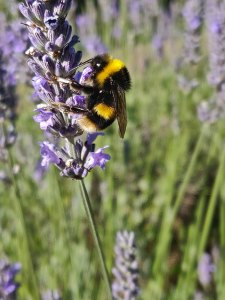
David Goulson argues there is a danger that young people growing up in the world today will find it hard to miss things that were rare or missing from their childhood while growing up. Like green spaces for some, bird calls for others, or bumblebees that have gone extinct in eight states and are barely hanging on in New York State. They are gone in Idaho, Maine, New Hampshire, North Dakota, Oregon, Rhode Island, Vermont, and Wyoming. Their numbers have dropped by over 50% in the Midwest and Southeastern states.
At the turn of the century, I mean the turn of the last century now that we have turned this century. 1904. Got it. Over a hundred years ago, an Asian variety of the chestnut was brought to New York, and with it came a hitchhiker called Cryphonectria parasitica (formerly known as Endothia parasitica.) This is a fungus that the Asian chestnut trees carry with them. They, as a species, had evolved with this particular fungus for vast amounts of time and thus were resistant to its devastating effects. Sadly, the American chestnut specie was not. Over 4 billion trees perished in just a few decades of the fungi’s introduction. The loss of this keystone species was a devastating environmental and economic disaster. The wood of the American Chestnut was highly prized. Its loss changed the makeup of the eastern forests. The nut renowned for its ‘roasting on an open fire’ was a multimillion-dollar industry. Not to mention the millions of animals that utilized the nut as food and the tree as a resource and home. Five known species of invertebrates went extinct due to the loss of the American Chestnut. Some animals are so closely associated with other organisms that they cannot live without them. These specialists are particularly affected when the numbers of their coevolved species are reduced. There are currently hundreds of millions of white oak trees (Quercus Alba,) in the United States as of 2022. A number to remember for a later discussion of Sudden Oak Death Disease. Ah, scary name, guys.

I apologize if you were under the misconception that there wouldn’t be math. But the kind of math you will encounter is mainly of a comparative nature. Which is bigger, which is smaller, the trend is increasing, the trend is decreasing. That number is huge! Startling big, actually. I know you can handle it.
As mentioned earlier, the fungus hitchhiked into the United States on the back of an alien species. An alien species is a plant or animal that has not evolved in a specific area. In this case, it was the Asian Chestnut tree. You guessed it, a type of chestnut tree native to China. You may find an alien plant species thriving in your area, but it came from another location in the world.
An excellent example of an invasive alien species is the Norway Maple (Acer Patanoides). You may well have one of these trees in your front yard. If you look, you can probably find one on your street. They are becoming ubiquitous in the U.S.
This causes several well-understood problems. Because the alien species did not evolve where you live, it does not fit well into the food webs established over millennia. These plants are often advertised as pest-free exotic garden species. Pest-free means nothing eats them. So, does anyone see the problem with that? In later chapters, we will dive deeply into biodiversity and food webs.
For now, it is sufficient to point out that the species does not fit into the food web. It does not supply food to the critters that live in your yard, or that could live in your yard if you didn’t focus all your attention on a foreign alien species called turf grass.
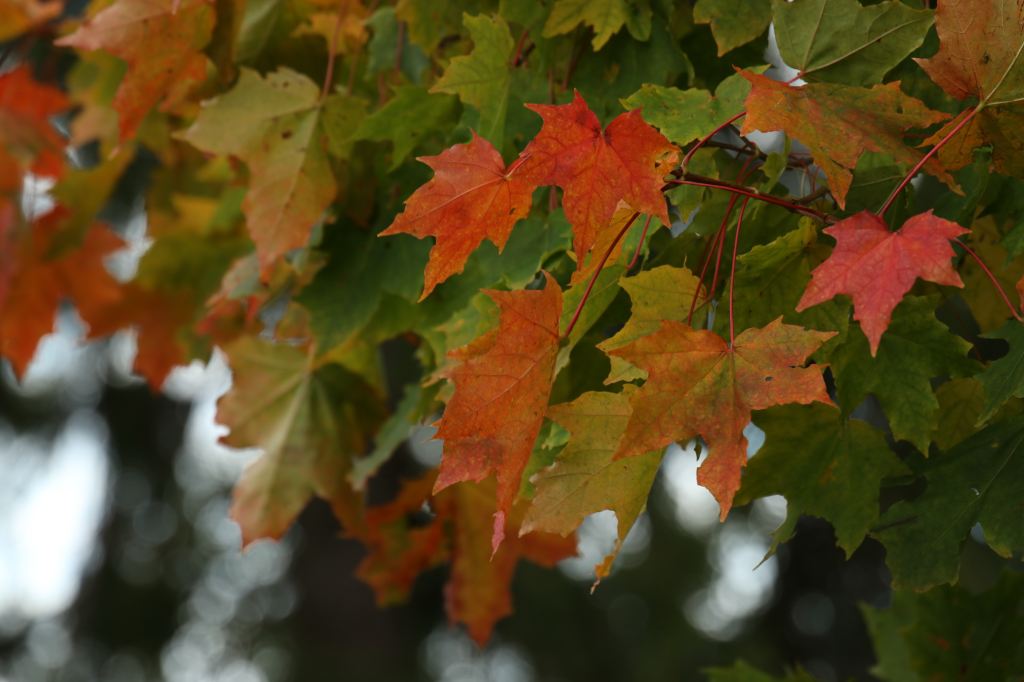
The aforementioned Norway Maple produces a prodigious number of seeds that helicopter on the wind to germinate far and wide. Like most alien plant species, far, far fewer organisms feed upon the Norway Maples than sugar maples or other indigenous species or species that have evolved in your area. It would be wise to limit the introduction of alien ornamentals from outflow beds and gardens, as with each plant that arrives, there is a chance a new disease, blight, or bug will find its way into our native landscape.
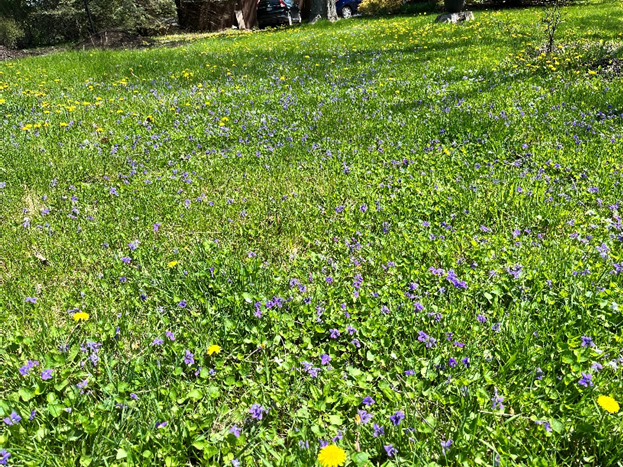
I began our conversation by discussing the two lawns. My yard as it stood on day one of this project and, Guys, my neighbor’s lawn on that same day.
Here is a look at our lawns at the beginning of May 2023.

Disclaimer – Some may argue that by calling us, people that is, foolish, I may alienate potential readers and therefore lessen my reach. I say the truth is sometimes painful but also necessary when change is needed.
Alas, we are only humans; therefore, logic is beyond us. Yeah, I said it. Humans are not logical, and the lawn is a foolish idea. Do you feel that? That’s your mental defenses kicking in. Your mental hackles are up because you think or feel I just called you a fool. See, we as humans are not logical. I said lawns were a foolish idea.
Of course, in this side-by-side comparison, the difference in biodiversity is easy to see. The picture on the left is full of diversity and complexity and provides food and a living, breathing habitat for hundreds of species. The habitat represented on the right allows for the existence of just the people and the grass. And I will additionally argue it isn’t beneficial to the people either.
In writing this blog/book, I am attempting to do a complicated and challenging thing. I am trying to persuade folks like John, my wife Terri (an early and enthusiastic convert, more on her later), all the Guys next door, and all my readers to reconsider what they see in the lush green lawn aesthetics—and those satisfyingly straight lines and symmetry.
Lawns are a stupid idea; if you would please bear with me, I will prove it. You, my friend, are not stupid. You are, in fact, brilliant, which I can tell without even having met you because you have chosen to read this blog. You will find that if you disagree with me at the moment, you may eventually change your mind. You may find you agree with me both about your being brilliant and the part about lawns being stupid.
We can do better! And it’s not that hard! And it will cost you less money! (In the long run) You will feel good about it! And it will make a difference to the world around you.
Join me in Listening for the Sounds of Summer. Remember to subscribe and hit the like button. The more support I receive, the more we can do to Save the World One Yard at a Time.
Questions? Please leave them in the comment area. If you want to receive updates on projects, events, and upcoming book releases, please visit my Author page and fill out the contact me information. Terryjohnsonauthor.com
 T.L. Johnson
Leave a comment