
This week’s article is about examples of successful recycling programs.
Corporations have created unimaginable piles of garbage. We have gleefully participated as consumers. This story will help illustrate that there are pathways out of this mess.
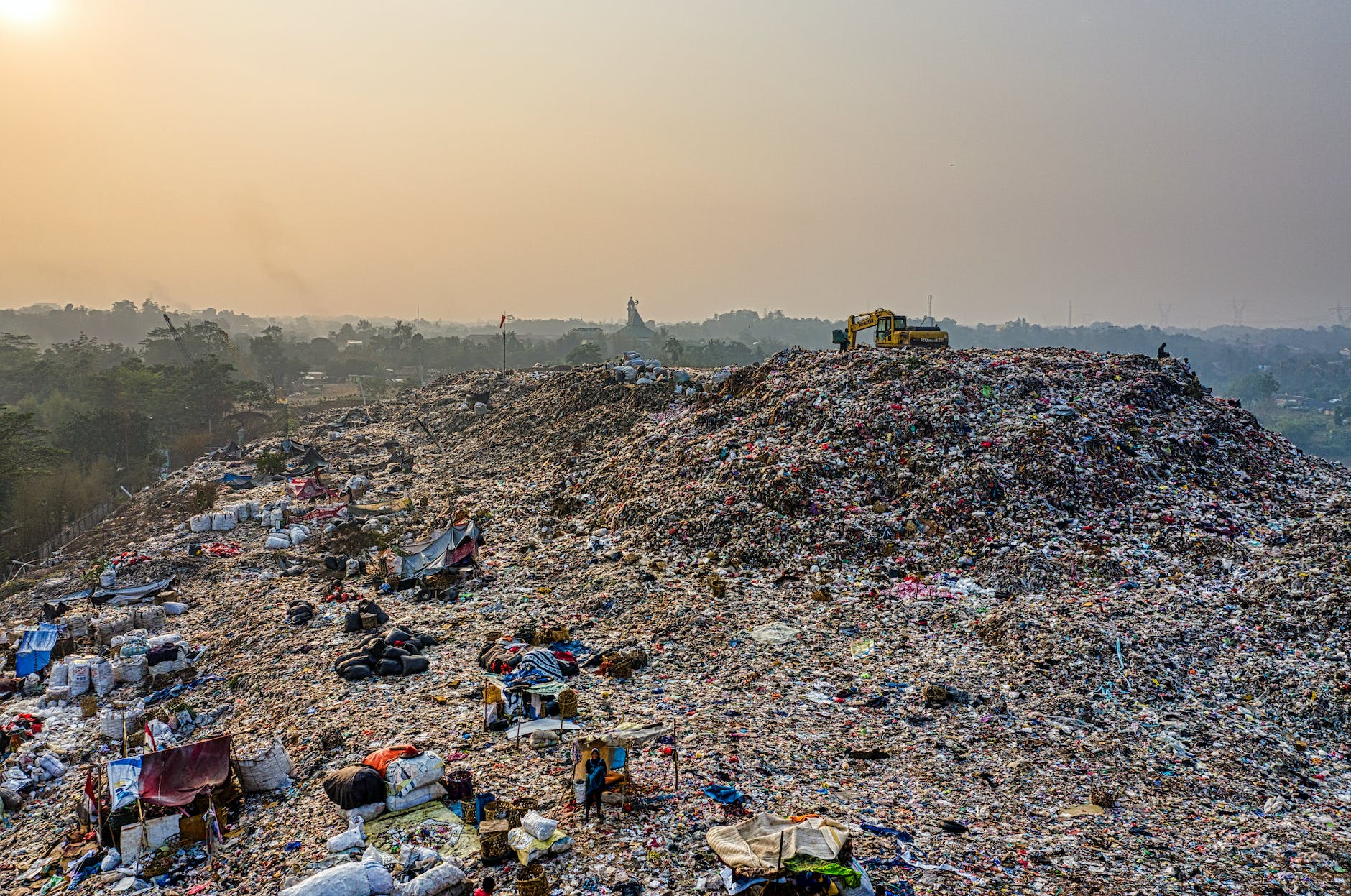
We’ve spent a few weeks exploring the dangers of packaging, plastics, synthetic fibers, and the petroleum industry, and as promised, we will pause to consider how we can do better.
First, here are some Facts for you to consider.

The United States recycles around 32% of its waste.
The plastic recycling rate is 5%
Don’t equate the cuteness of the tiny representation of our recycling to something good. It’s bad. Bad puppy.

Germany recycles more than 61% of all its waste.
71% of its packaging waste.
The plastic recycling rate of 45%
That’s a Good Boy!
Austria recycles more than 50% of its waste.
Some other top recycling countries are Japan, South Korea, the Netherlands, and Switzerland.
I took some time to research how these countries achieved such incredible results; after all, we’ve known about the problem with plastics for decades. Certainly, pollution has been on our radar going back to the beginning of the century. And thanks to all the millions of advertising money spent by Big Oil, Americans believe in recycling. Remember the surveys – 75% of Americans think recycling is important.
Why, then, the disparity in the numbers.
In America, 32% of waste is recycled 5% of plastic is recycled.
In Germany, 61% of waste is recycled 45% of plastic is recycled.
According to Earth.Org, Germany’s success in recycling comes down to strong government policies and high public awareness.
The two advanced technologies they have used are multi-source collection and deposit refund systems. Wait, those aren’t advanced technologies; but common sense, easy-to-implement changes.
To ensure this takes place efficiently and as widely as possible, you need to pass regulations mandating recycling collection in a multi-source collection format.
The Dutch have an entirely cutting-edge and new way to battle this scourge. No, no, sorry, they don’t. They do it the same way the Germans do it.

They use multi-source collections with colored bins.
In fact, you can see a bin in the picture above. That one appears to be a trash receptacle. The larger cities have communal drop-offs, where you can bring your separated items any day of the week. Different colored bins for your plastics, your glass, your paper, and your trash. Each with vast underground receptacles that are emptied by large trucks.

Deposit return schemes to encourage return and reuse.
We did it. We identified a problem and have come up with a common-sense, relatively easy-to-implement solution that has been proven to work.
Please take a moment to contact your government representatives and let them know we have solved the recycling crisis here in America. Don’t forget to provide the link to this article, and it wouldn’t hurt if you shared the link with everyone you know as well. Oh, yeah. You will be helping save America by subscribing to my Blog.
In review: we already have the citizen buy-in and know-how. We don’t have to wait for new technologies to start making significant headway toward increasing recycling rates. Simple. At least as far as it goes.
We need government policies to support consistent and uniform multi-source collection. Add a consistent and uniform national deposit refund System modeled after one of the existing state models, and we are on our way.
Seriously, with these common-sense, practical changes, you could see a drastic increase in recycling rates in this country.
Now for the Hard part.
If you have read my previous articles, you will know there is always more to the story. Complexity and nuances take a bit more time to discuss and understand. This, of course, is what makes these articles challenging to write. Most news outlets would consider the remainder of the story beyond patients’ or readers’ interest. But I have confidence in your curiosity.
Why is the US plastic recycling % so low?
Corporations produce many different kinds of plastics they know cannot be economically recycled. They then spend millions of dollars on advertising, encouraging consumers and communities to recycle. This type of hypocrisy is part and parcel of our capitalist system. I get it people act in their own self-interest. But as my daughter constantly reminds me, the multi-millionaires profiting are humans living on this planet. Therefore, ensuring a livable world for their descendants is in their best interest. There is common ground. While much of it is polluted with the effluent of factories and covered in the mass-produced products of heartless and mindless corporations.

Though neither of us is waiting for the heads of these corporations or their shareholders to have a change of heart. Or, indeed, to demonstrate any semblance of a heart. They sold theirs to the god of capitalism long ago. Still, this is a democracy (at least for now). Even though it is a screwed-up democracy where corporations have more power than individual people, there may come a time when people take matters into their own hands and elect representatives who will enact legislation that will regulate companies and hold them accountable for the products and pollution they produce.
Success story part II
Of course, there is always more to the story. While corporations in the US use the idea of Capitalism to shield themselves and their profits from their social and moral obligations. At this time, it would be instructive to look at what they did in Germany and the Eu.

Of course, once these countries became serious about recycling, they realized it would be much easier if there was less waste. So, they passed legislation that did the following:
- Made polluters pay for what they produced.
- Made producers responsible for the recycling of their packaging.
- Used Green Dot to signify corporate compliance.
The principle of “polluter pays” has for decades been the cornerstone of the German approach. Please go back and read From Solar Panel to Most Likely More Trash. In the article, I discuss the idea that limiting pollution at the source is much less costly to society as a whole. Corporations should be responsible for their products, packaging, and the pollution it produces.
As early as 1991, manufacturers in Germany were required to take responsibility for their packaging. This was followed by The Waste Management Act of 1996
The Packaging Ordinance (Verpackungsverordnung – VerpackV)
This ruling came into force in 1991. It states that manufacturers and distributors of goods are responsible for ensuring packaging is either returned or recycled. This applies to commercial and domestic goods.
Quotas are set for the recovery of materials which manufacturers and distributors must abide by.
Question Who funds recycling programs in Germany and Denmark?
I know what you are thinking. But won’t prices go up? Won’t I have to pay more at the grocery store? Won’t this cost us more? The answers are yes, yes, NO!
It will cost us much less as a society. Magnitudes less. Yes, an unknown, probably unknowable amount but a hugely significant amount less. And not just in $. It will save human lives and reduce human suffering.

Green Dots on packaging in Germany signify that the manufacturer is a certified participant and financially responsible contributor to recycling the waste product. What eloquent solution to help alert consumers and limit greenwashing strategies.
Companies that do not participate are fully responsible for reclaiming and recycling all the packaging they produce and are subject to audits and fines.
Plastic producers in the US would think twice about covering everything in cheap use-plastic if they were held responsible for the waste they produced. What a logical and fantastic solution to the problem.
We can do so much better. And the solutions are well within our reach. They are not difficult to implement. The issue here is one of inertia. People believe in recycling. They believe in a clean environment. The problem is that a vocal wealthy minority of the US population does not believe in regulation. And the corporations have been spending millions, and their lobbyists have been working diligently to hoodwink folks into believing that corporations have their best interests at heart.
More success. Things can happen relatively fast.
Several European Union countries have made great strides in working to meet the EU goal of a 50% rate recycling rate.
Here are a couple examples of the Fastest risers (I Know Brexit)
UK and Ireland
UK from 12 – 39%
Ireland from 11 – 36 % in less than ten years.
Reminder US is currently at 32%. Imagine the landscape if laws the following laws were passed:
Uniform multi-sourced recycling
Deposit Return Program
Producer Waste Accountability Legislation.
– simply making corporations responsible for the waste they produce through fees, taxes, or their own reclamation and recycling system.
Wow! We did it! We solved a problem. If you like what you read here, please let me know. Leave a like, comment, or subscribe to receive the newsletter.
Take care, and stay curious.
 T.L. Johnson
Leave a comment