
My daughter uses reusable plastic containers for her shampoo, conditioner, and body soap. They come in medium-sized baggies of moderate thickness. Each is full of products and capped with a twist top. They come with a return addressed envelope. When you have exhausted the contents, you simply place them in the brown envelope and return them. Rinse and repeat. Neat.

She also helped us find wooden toothbrushes and soap that come in paper packaging. These are simple steps that millions of consumers are taking. As I have mentioned in past articles, I disagree with the insistence that this is a consumer issue. The oil and plastics industries are the ones pushing that scenario. The plastics industry spends tens of millions of dollars, not on recycling but campaign ads intended to shift the responsibility for recycling onto the consumers and the communities in which we live. By pushing for recycling, they take the focus off the actual problem. Single-use plastics need to be severely restricted. Plastic production needs to decrease. Estimates are that plastic production will actually triple by 2050. Please look back at my article’s exploring the perils of plastic.
Plastics pose a complex set of economic, social, and environmental problems. The solutions need to wide-reaching and varied as well. To be clear, The solution to the plastic problem is the production of fewer plastics.
There is no getting by the fact that plastics are useful. Their ubiquitous nature is direct evidence of this. Look around you; plastics are all around us. If you participated in our no single-use plastic shopping challenge, you know how prevalent it is. Containers, bags, clingwrap, bottles, and stickers are found on and around almost everything you buy. I gave one example from my daughter on how some companies are taking it upon themselves to provide consumers with sustainable choices.
Today’s article will focus on consumer options that currently exist as examples of what is possible. With just a bit of research, you can find local or online alternatives that fit your needs as well. So that if you are motivated, you can start to make a difference today. Of course, real change will only occur when we hold those responsible for the creation of the problem accountable. Still, economic incentives, grassroots pressure, and building awareness can lead to political pressure and, in rare cases, positive change. (Oh, so Jaded.)
Small companies such as the one my daughter uses. The Good Fill. Shampoos, conditioners, and body wash in reusable containers.
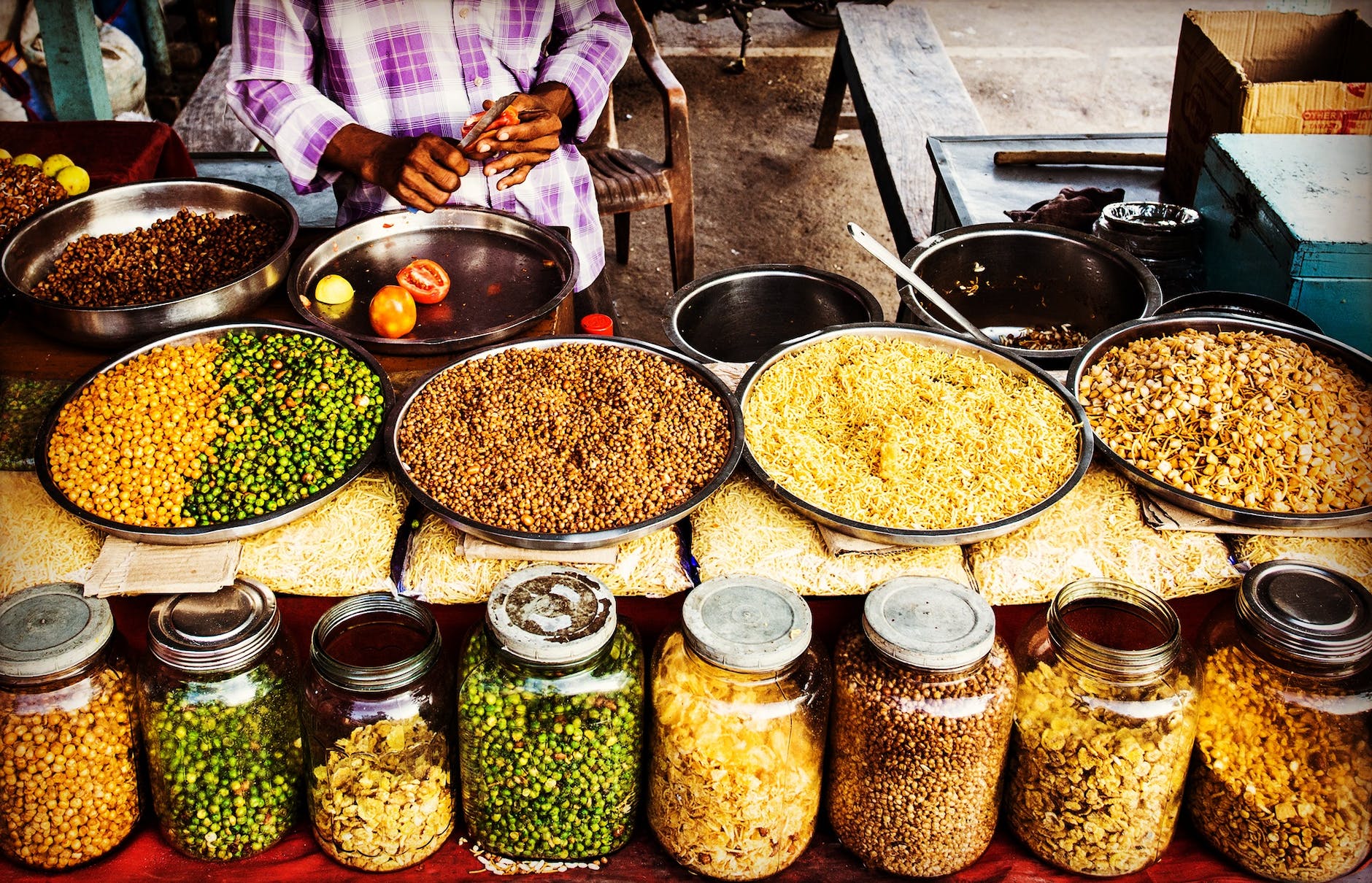
Food stores sell their produce in bulk and use paper bags. They exist. Not many, and not everywhere.

Lickalix Europe. Produce popsicles made from whole fruit in compostable packaging. 100% plastic free.
Sun and Swell. Snack company. With compostable packaging and a send-back service if the consumer is unable to compost.

Us two Tea. 100% biodegradable tea sachets.
Truman’s cleaning supplies are in reusable returnable bottles.

Anchor, a milk producer in Australia, is converting its containers to what it is calling a sustainable alternative. The bottles are made from plant-based, sustainable, sourced sugar cane. I will look into this further when we explore plastic alternatives in future articles.
Greenwashing is when a company uses advertisement or marketing spin to put a green sheen on its line of products. This can give their product a greener reputation than it deserves. Companies invest millions of dollars in advertisements to green the appearance of their products instead of investing millions of dollars in green technologies or structural changes that might lead to more sustainable production practices.
I, therefore, hesitate to loudly applaud large companies that have massive plastic and carbon footprints for taking baby steps in recognition of the problem. But here we go. They are baby steps in the right direction.
Evian. Yeah, the same company that has produced all those plastic bottles. It is estimated that one million plastic bottles are sold worldwide every minute. Well, Evian has pledged to be using 100% recycled plastic in their bottles by 2025. Okay. Can’t we just use reusable water bottles instead? Why is that so hard?
McDonald’s has made a similar pledge. It claims to use renewable, recycled, or certified sustainable packaging by 2025. We will talk more in upcoming articles about sustainable packaging, so stay tuned.
Guinness is investing 21 million to eliminate all plastic from its packaging. I Love Guinness. Cheers!

Sodexo, a food service company, is getting rid of plastic, single-use plastics, and of course, straws as well as phasing out polystyrene foam containers.
Plastic straws are stupid and should not be used. Stop it. I won’t even tell you how many there are because the numbers are so big they are almost unimaginable. Okay, one number. Red Lobster will eliminate plastic straws. Which accounts for 150 million per year. That’s Red Lobster alone.
Brewer Carlsberg will eliminate those plastic rings that hold beers together and use biodegradable glue instead.
Ethique Beauty supplier of shampoos, body wash, and conditioners, is a zero-waste company. All their products are in bar form and come in cardboard containers.
A bunch of companies getting rid of plastic straws. Thank you.
Sorry, I know I said one number, but I cannot help myself. 150 million a year from McDonald’s and 1 billion from Starbucks. 500 million straws are used a day in the U.S. alone.
Many companies are doing away with plastic bags. I will be writing an article on the carbon footprint of alternatives soon.
Okay, so this is something to keep your eyes on. Is this Greenwashing or a pivotal moment. Nestle, the largest food packaging company in the world, has pledged to make all its packaging recyclable or reusable by 2025. My question is: what do they mean by recyclable? Under what conditions? So many questions.

I know I may be considered a cynic. But we have heard all of this before. I looked at their website for details but, of course, only found rhetorical Green Sheen. Here are some examples.
“We are committed to designing 100% of our plastic packaging for recycling. As of 2021, one-quarter of our plastic packaging that had previously not been designed for recycling had been improved and redesigned so that it could be recycled. At the same time, we phased out non-recyclable materials.”
But, there are no actual details about what it is made of or the type of plastic or if the recycling technology is scalable or profitable, or if there is a market for the recycled product. In the past, internal studies from companies in the packaging industry have shown they knew that recycling was not a viable option.
“Supporting infrastructure that helps to make recycling easier.”
Yes, but you made the plastic. You should collect and dispose of it, not assist in supporting the infrastructure to make it easier for us.
“by aiming to collect and recycle the same amount of plastic as we use in our products under a ‘one tonne in, one tonne out’ principle.”
Same old song and dance. By aiming, they mean by scamming the public into collecting and disposing of the health hazard they produced, distributed, and profited on. Do they have a working facility that is profitable? A model that can be scaled up. Have they done the math? Show me the Math!!
Driving New Behaviors
“Addressing the plastic waste challenge requires behavior changes from all of us, including Nestle, consumers, retail partners, and suppliers.”
I am not buying it, and you shouldn’t either. This is the same old dance to a new tune. Stop the music and stop producing single-use plastics.
The new phrase you will hear from the plastic industry is all about the Circular Economy.
Reminder Plastics are not safe. Plastics pose a danger to our short-term and long-term health.
The plastic industry will argue that plastics are sustainable if only we invest in technological solutions and create a circular economy.

“Plastics are essential components of a circular and climate-neutral economy. Their durability, resource, energy efficiency, and recyclability facilitate the circularity of products and a climate-neutral society. Plastics are also playing a key role in the journey towards a sustainable and climate-neutral future, e.g., in electric cars, wind power stations, and energy-efficient homes. Plastics are key to delivering the sustainable solutions valued by society.”
Reminder The plastics industry spends tens of millions of dollars, not on recycling but on campaign ads intended to shift the responsibility for recycling onto the consumers and the communities in which we live.
If you have read anything I’ve written, you understand the above paragraph is bunk. Plastics are made by an energy-intensive, environmentally degrading industry based on a nonrenewable resource. It is nonbiodegradable and, perhaps worse, breaks down into micro-plastics and nano-plastic particles. The statement is nonsensical. Do you like how it takes credit for electric cars and wind turbines etc.? I guess they could have listed anything with plastic in it, really. They can also take credit for Legos, blow-up dolls, and, oh yeah and 600 billion water bottles and 182 billion straws produced each year. And finally, all the future health problems caused by microplastics and nano-plastics.
Speaking the power of consumer spending. While not directly related to plastic, I did come across an interesting article about folks working on carbon footprint databases that you can use to check the carbon footprint of food items. Eventually, we may find this sort of information available in a helpful app or on the packaging. More on this when options become available for public use.
Make sure to add your own resources in the comment area. What zero-waste products or companies do you use? Join me on our next exploration when we take a deep dive into plastic alternatives. Thanks for all your support. Make sure to hit that like button and subscribe to receive the newsletter. Take care, and stay curious.
 T.L. Johnson
Leave a comment