
Out of sight, out of mind. Compartmentalization. Only dealing with variables that are under your control. Rationalization.

These are just some reasons we don’t run around all day, pointing out all the problems we see in the world around us. We know we’re burning fossil fuels and producing vast amounts of carbon dioxide into the atmosphere, and it will very shortly, if not already, create catastrophic mayhem. Yet we blithely drive our cars to work each day.
Those who do not believe in climate change will, of course, dismiss this as more environmental crying of the Wolf. Some of those are just greedy bastards; others just can’t help it. They are made to believe what they believe. And they believe it so fervently as to not question that belief. And to actively fight those that challenge that belief. The name for this is righteous. Another word for such individuals is Humans.
I myself righteously believe they are wrong. After all, I am human as well.


For a very long time, I believed in recycling. When I was young, I worked in the city of Manchester, New Hampshire as an environmental activist. A sort of inexperienced ground-floor lobbyist. Long story short, the city wished to build a garbage incinerator to handle their waste and create energy. It was, of course, advertised as a win-win for the city’s residents. We met with local organizations and the city council to inform them that burning garbage produced multiple pollution problems. That there was, in fact, no silver bullet. There is no such thing as away, or downstream. They were taking one problem and turning it into several more complex issues. The air pollution and the remaining ash would now be highly toxic waste that would still need to be placed in a landfill. In the end, the city decided to invest in a recycling program. I was proud of this work, and for many decades it was my understanding that recycling was moving forward. Technologies Improving efficiencies, the promised profitability of the waste product driven by capitalism and economic opportunity.
Flash forward to the present day. As a species, we are so gullible. We want so badly to believe that we are all in this together. That we are all pulling in the same direction, that we overlook the obvious. It shouldn’t be surprising. The hopeful and desperate are the most easily scammed.
I noticed the immense amount of packaging surrounding almost everything I brought home. Then came the time of Amazon. Boxes upon boxes within boxes, often filled with plastic filler, all to ship me items that themselves are wrapped in single-use plastic. Arrrg!

At least I could separate them and put them in the recycling bin. Where I, as a gullible human, assumed they were being recycled. I mean, why go to all the trouble of separating them from the other garbage streams if they all end up in the same pile? Ah, the optics, of course.
People would be upset if communities didn’t offer recycling programs. As long as they were separating their trash and placing the problem and the misnamed recyclables into the bin, they could forget they existed. They could offload the guilt and awareness of the resource and pollution problem.
I wondered just how many people were simply oblivious to this issue as I was. First, the good news. 94% of people in the U.S. believe recycling helps the environment.
75% say recycling should be a top priority.
We are going to come back to those numbers later in our exploration of this issue.
Now for the bad news.
49% of the people surveyed are concerned that recycling programs as not working well.
35% of people surveyed report they recycle.
30% are concerned what we put in the recycling bins is not being recycled.
I spent three blissful decades thinking we as a society were working on this problem. That some of the best and our brightest minds were working to figure out how best to recycle all those packages. We have all been scammed again by corporate America.
75% of Americans think recycling should be a top priority. We reached that number due to a massive ad campaign financed by the same corporations that are actively profiting from the production of all the plastic and packaging.
Analogy. Driving your car leads to excess carbon dioxide in the atmosphere. Instead of the oil companies suddenly encouraging everyone to drive less, to invest in mass transit, green energy, electric vehicles, and car-sharing technologies. They instead say they will develop a technology that will take the carbon dioxide from the air and sequester it underground. It will simply take massive technological breakthroughs, billions in investment, and government subsidies. Their own scientific research currently suggests that carbon capture may not actually be a feasible solution. The oil industry is spending millions of dollars greenwashing its activities and inciting conservative backlash on environmental investment concerns to maintain the status quo.
This is, of course, exactly what they are doing in the area of recycling. And many of the same conglomerates are involved.
The plastic industries are using the same playbook. They have spent millions over the years expounding the virtues of community and citizen recycling programs. First principle: They created the pollution; they should have to deal with the result. Instead, they have foisted it upon the citizenry.
They implore us to Do our part and recycle. Even though their own studies have shown that recycling is economically unsustainable or unprofitable or at least incredibly less profitable than the current economics of plastics and packaging, which remains unbalanced. They produce plastics and packaging, and society deals with the costs associated with the results.
Again it is important to reiterate that the corporations have done the studies and found that recycling is not profitable. Yet, they spent hundreds of millions convincing communities and individuals that doing so is their moral duty.
The industry was under real threat. Bills were moving through congress. They had to do something but knew recycling was not a viable economic solution. Documents from the industry going back as far as the 1970s show they understood recycling was not feasible.
They decided to advertise their way out of the problem. Anesthetize the masses by greenwashing the problem away. It may have sounded like a message from a group concerned about the environment, but the ads were paid for by the plastics industry, made up of companies like Exxon, Chevron, Dow, DuPont, and their lobbying and trade organizations in Washington.
The ads touting consumer recycling ran for years, promoting the benefits of a product (plastic) that, for the most part, ends up being buried or burned. Don’t forget the accumulation of plastics year after year. Plastics that do not biodegrade. Plastics that will shed micro-plastics and nano-plastics for hundreds and thousands of years. Check out From Oil to Plastics to More Plastics to even More Plastics.
And those ads were effective. They convinced people that recycling was a priority and good for the environment. Remember that 92 % number from earlier.
Consider the incredible lengths communities all over the United States of America have gone to preserve this con. The communities participated perhaps unwittingly. I mean, you won’t blame me if I question whether waste management companies whose yearly profits have ballooned to tens of billions of dollars annually didn’t realize they were collecting recycling bins and burying or burning most of it and recycling only the slightest bit.
The community and the waste management companies benefit from the appearance that they are involved in recycling.
Waste management and the plastic industry are fully aware, after all, that recycling is not a profitable undertaking. But the illusion of recycling allows for the plastic industry to continue to profit. The waste management industry, meanwhile, is not in business to clean up the world; they are simply in it to “clean up.”
This whole thing is an immense Con Job, and we end up paying the price long-term due to the obvious economic, environmental, and human health issues to come. While the oil industry continues to profit by producing virgin plastics.
Documents show industry officials knew the reality concerning recycling plastic as far back as the 1970s. Yet they chose to run a scam on the world to ensure future profits. Check out
How Big Oil Misled The Public Into Believing Plastic Would Be Recycled
If I haven’t made it clear enough, or you somehow missed all the news coverage over the last year. Still, why so little so late.
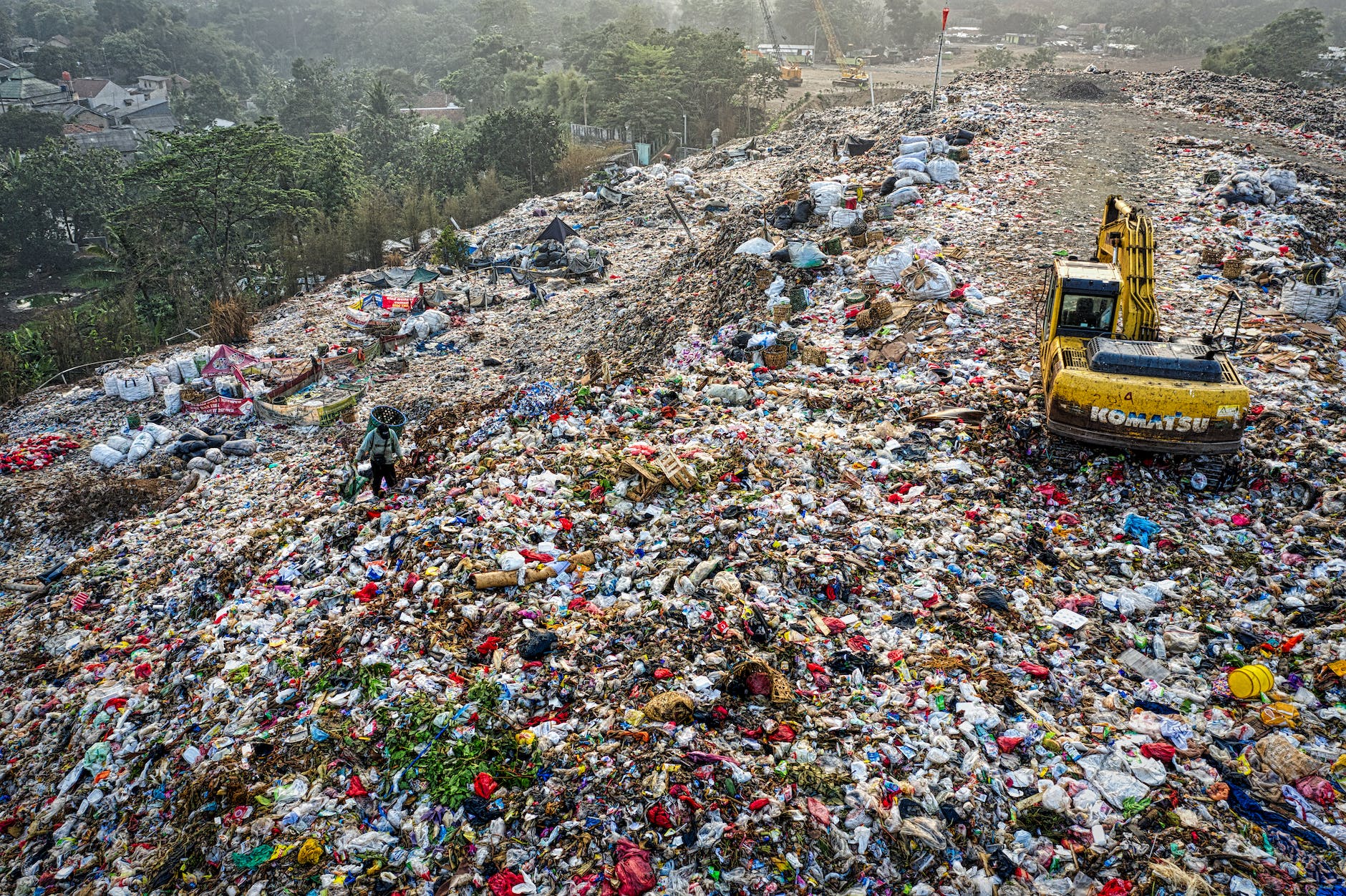
It is estimated that a mere 5% of recyclable materials are actually recycled.
The rest is buried in the landfill or, worse, burned. Check out Your Recycling Gets Recycled, Right? Maybe, or Maybe Not
While burying the plastic in a landfill where it will slowly break down into smaller and smaller plastic particles may sound dangerous, burning the plastic waste has many of its own problems. Plastics are made from fossil fuels. Burning plastics releases carbon dioxide gas which will only exasperate our fight against climate change. In addition, burning plastics has the potential to release toxins into the atmosphere.
On the other hand, when plastics are buried, those greenhouse gases remain trapped in the molecules of the plastic. The main takeaway is that no matter how fantastic plastic is, we need to only use it in areas where the benefit outweighs the total costs. One example would be for medical purposes; I am sure there are many more. Still, the vast majority of uses are simply based on convenience and profit-driven
So what can be done?
The solutions are simple to say but challenging to manifest
Incentivise safe and proven alternatives to plastics. Let me repeat. Safe and proven options.
Disincentivise single-use plastic use.
We need legislation to address one-use plastic packaging and production.
Shift responsibility for recycling programs from consumers back to the plastic industry.
We need to consume less.
Establish reusable containers at scale for products.
The purpose of this blog is to educate and inform. It is my goal to make writing my second career. The purpose of this website is to write about topics that are interesting and for which I feel passionate. Please show your support for this work by clicking the like button, adding your comments, and subscribing to the newsletter. Thank you to all my followers for your support.
 T.L. Johnson