By Terry L Johnson
Serving size seems like a very straightforward concept. But the waters become a bit murky when exploring how serving sizes are determined and how companies implement the idea.
One might assume a serving size is a guide for how much of the food product you should eat in one sitting.
Sorry, no. That’s the portion size. Portion size is determined by you and you alone. And perhaps the help of your significant other, your doctor, or whether you’re trying to gain or lose weight, build muscle, or get lean. Whether you are trying to control your glucose level or lower your cholesterol. All the more reason for clarity in the application of food labels.
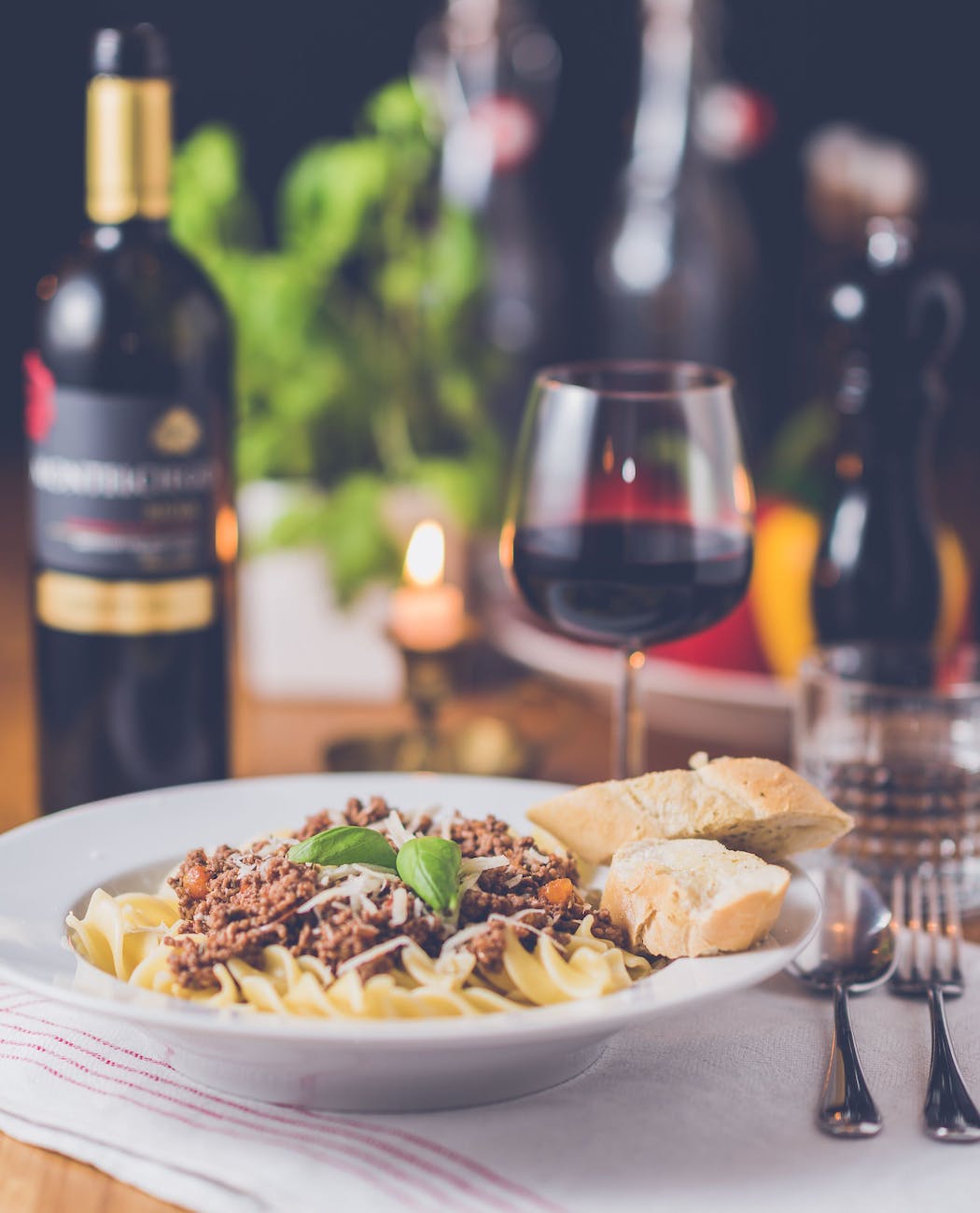
Of course, If you go out to eat, you leave this up to the restaurant; you can be in big, maybe even super-sized, trouble. Portions sizes at restaurants have doubled and tripled over the last twenty years.
How about we make a serving size the amount most people consume in one sitting? Okay, sounds reasonable.
The NLEA Nutritional Labeling and Education Act empowers the US Food and Drug Association to oversee the nutritional labeling of food products. The FDA provides a primer on understanding serving sizes and offers to teach you the skills to discern at least a glimmer of understanding. Any system that needs a whole website to help people understand the system probably needs some work. Today’s article will provide information and help us all understand servings sizes.
I wonder:
Do you think there is a tension between the clarity desired by the public and the opaqueness some companies would prefer? I wonder if the FDA can be counted on as a faithful arbiter and advocate or if they are too beholden to corporations to serve our needs. Let me know what you think in the comments below.
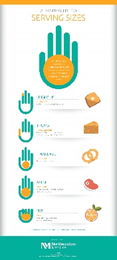
Northwestern Medicine guide for portions and serving size
Let’s Start our deep dive with this quote from the FDA.
Serving sizes are standardized to make it easier to compare similar foods; they are provided in familiar units, such as cups or pieces, followed by the metric amount, e.g., the number of grams (g).”
FDA.
Serving size is standardized in grams and then made murky by the use of different units. Still, my wife reminds me that most folks are not all that interested or comfortable using metric units. I counter that it is so much easier to use the metric system and begin to elaborate with informative examples of how it all began, demonstrating that the size of my thumb is approximately an inch and the length of my arm is a yard; people realized the need for a system of standardized measurements. My wife informs me that I should go back to teaching if I want to lecture at folks. I explain I’m not lecturing but being informative and helpful. She recommends that if I wish to be informative and “helpful,” I should go write in my blog. So, here we are.
And while most people generally understand teaspoons (tsp), tablespoons (Tbs), and cups, using different units makes comparison unduly cumbersome. (And precisely not standardized).
Reminder, we discussed in Potato to Potato Chips the serving size for potato chips is 28 grams or approximately 15 potato chips across all brands of potato chips. Let’s compare that actual standard to “standards” for breakfast cereals. Using logic and common sense, you may assume that the agreed-upon unit for breakfast cereal would be measured in bowls. I mean, we pour ourselves a bowl of cereal in the morning. Let’s take a look.
| Brand | grams | Other units | Calories |
| Cheerios | 28 | 1 cup | 105 |
| Rice Krispies | 40 | 1 ½ cups | 102 |
| Cinnamon Toast Crunch | 28 | ¾ cups | 110 |
| Frosted Flakes | 37 | 1 cup | 130 |
| Raisin Brand | 59 | 1 cup | 190 |
| Captain Crunch | 38 | 1 cup | 144 |
| Life | 32 | .75 cups | 120 |
| Reese’s Puffs | 39 | ¾ cups | 120 |
Analysis:
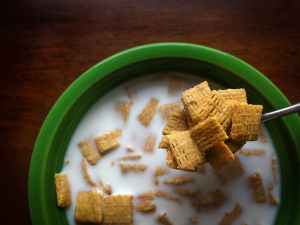
If you pull out your average cereal bowl, pour in some cereal, and add some milk, you will consume approximately the disclosed calories on the box. Unless you are eating Rice Crispies, serving size of 1 ½ cups, or Reese’s Puffs serving size ¾ cup, not to be confused with the serving size of .75 cups for Life cereal. Ah, there
Make sure to slurp up all the leftover milk. One of my favorite activities; To get all the additional nutritional value provided by the milk. Just found out they make cereal bowls that separate the milk from the cereal. Why oh why!
At the end of the day (or, in this case, at the beginning of the day), when you pour yourself a bowl of cereal in the morning, the average cereal bowl is 8 oz. That is 1 cup.
I don’t know about you, but I didn’t pay much attention to food labels in my younger days. And then, when I began to notice, I simply looked at the calories and offered a glance at some of the nutritional percentages. Though surveys seem to indicate that most of you do look at labels.
| date | A Great Deal | Not much | None at all |
| 2013 | 68% | 18% | 14% |
| 2018 | 70% | 21% | 9% |
AUGUST 1, 2018 Most Americans Overlook Restaurants’ Nutrition Labels
BY JUSTIN MCCARTHY
I was shocked when I realized many of my favorite treats were being dishonest with me. The package gave a certain number of calories, and I was okay with that. But the fine print indicated something more. The package actually held two to three times a single serving’s worth of calories. The calories shown did not represent the calories found in the food I consumed but only those in one serving size. So, the serving size needs to be multiplied by the number of servings I actually consume. Yes, yes, I know what you’re thinking, but it was a revelation to me.
While companies can make it difficult to quickly assess the total caloric impact of your food choices, the FDA has provided guidelines to manufacturers to improve transparency. Though, to be fair, the language of the rules is still vague and mostly just recommendations.
Let’s look at one example of a nutritional shell game being played by manufacturers. Hostess powdered mini donuts. Go for the minis because they’re smaller, with fewer calories, of course.

| Frosted Mini donuts | Serving size | grams | Calories | Total Calories |
| Bag of 5 servings About 15 donuts | 3 donuts | 55 | 230 | 1150 |
| 6 pack of donuts, 1 serving | 6 donuts | 85 | 370 | 370 |
The FDA now asks companies that produce individual serving sizes of their product to use one serving size as the serving size on the packaging. Hmm, well, that seems reasonable.
The FDA also changed the criteria for labeling based on package size. With the updated requirements, more food products previously labeled as more than one serving are now required to be labeled as just one serving. Why? Because people are more likely to eat or drink the entire container or item in one sitting.
A duh. In the not-so-distant past, there were plenty of packages with two to three times the serving size packed into an individual serving size bag. The industry would be careful to call these personal-sized packages, not one-serving packages. While the FDA recommendation is sometimes heeded, there are still many instances where the size of a personal-sized package does not match up with the serving size.
Yet, another practice that is pretty common and seemingly at odds with the rule’s intent is found in examples where there are two serving sizes for the same food product? Many companies use a creative standardization process similar to the one shown in the donut table above.
For a large bag containing around fifteen mini donuts, 3 mini donut serving size (because that is how many people eat at one time. Sure, it is), And for the package that is sold containing 6 mini donuts, well, who’s going to eat just half the bag. The powder will get all over the place if you leave an open bag of powdered donuts just lying around. So, yeah, 6 will definitely be the serving size in a bag of six donuts. Honesty in advertising. Wait, what about the fact that the same product has two different serving sizes?
At this point, you may be asking how serving sizes are determined in the first place? Serving sizes are determined using the Reference Amounts Customarily Consumed (RACCs), of course. Ah, what now? The government surveyed people about how much they ate. They then compiled the results and gave them a strange and confusing name, like they do. The information in the RACC is shared with manufacturers as the guidelines for setting their own individually “standardized” unilaterally determined and declared servings sizes for their products.
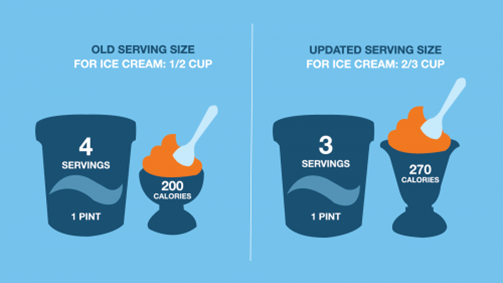
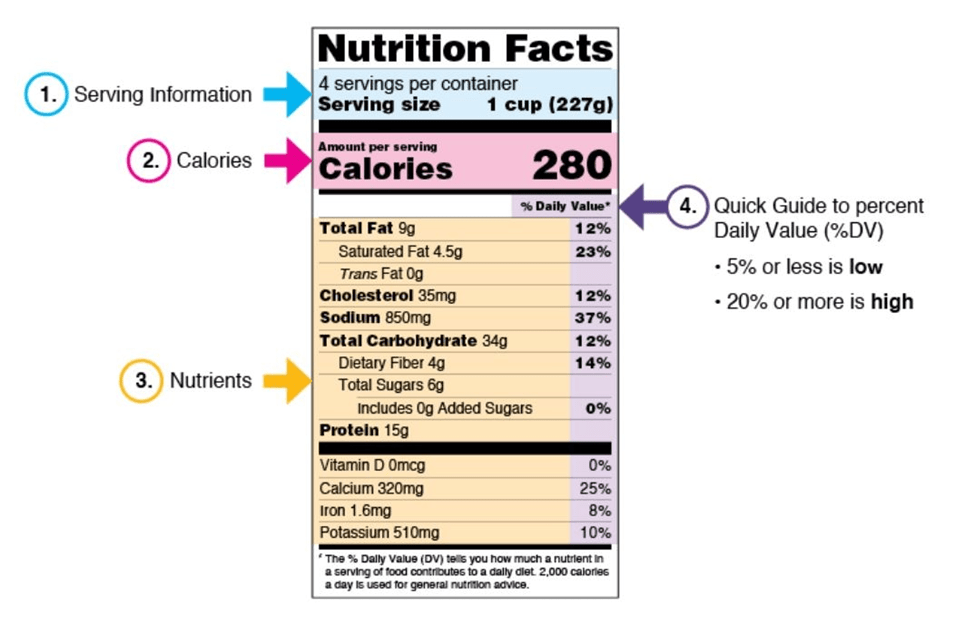
The FDA graphic above shows an example of how the serving size label may be updated based on the most current survey information. It is important to remember that these are FDA rules, which means they are simply suggestions to the manufacturer.
The old serving size of ½ cup, and the updated serving size is 2/3 cup.
The new serving size is represented by Baskin Robbins serving size of 2/3 cup. 270 calories cups.
Personal-size snacks. Ah, wait, don’t you mean one-serving size snacks. Nope, they don’t. Though it is a small bag, and they know you will eat it all, it becomes a serving size even though it holds more than a serving???
Let’s revisit the potato. After reading Potato to Potato Chips, we know a few things about the serving size and nutritional content of a potato.
| Lays classic potato chips | Serving size | grams | Calories |
| 1 lb bag | 1 oz | 28 | 160 |
| 1.5 oz bag | 1.5 oz | 42.5 | 240 |
| 1.0 oz bag | 1 0z | 28 | 160 |
The serving size for the same exact food product differs by 44%. Interestingly the company also makes an actual one-serving bag as well, represented by the 1 oz bag.
My advice to you, read the labels and be on the lookout for both the serving size and the number of servings per package.
Bonus Material: Are you a cheerio fan. It is the number one selling breakfast cereal. Coincidentally, the two brands that vary the most on our Cereal table above are Cheerios and Raisin Bran Flakes. The website Weigh School compared the two. Their findings indicate the two brands are similar in calories, fiber, and fat content. Cheerios wins when considering vitamins, and Raisin Bran is the winner when looking at cost per gram and does slightly better with fiber and less salt. What cereal do you prefer? Or have you found a better way to start your day?
I hope you find the information provided on this site interesting, engaging, and, well… thoughtful. I look forward to reading your comments and bringing you more information on a variety of subjects each week.
Have you seen any inconsistent or creative (shady even) serving-size labeling practices? If so, please share it with the community in the comment section below. All your opinions and support are welcome.
Please keep your comments on topic and be nice. I mean, why not.
Thanks for tuning in. Until next time, stay curious. Another thing, subscribe to get the latest post sent right to your email. Thanks for the support.
 T.L. Johnson